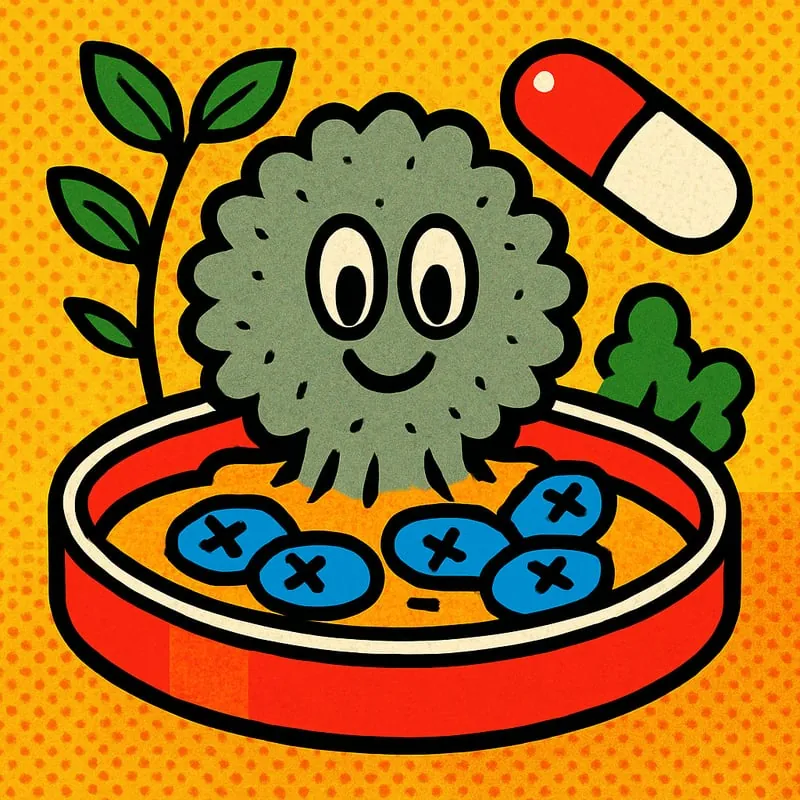
In September 1928, scientist Alexander Fleming came back to his messy lab after a holiday. One of his Petri dishes growing bacteria had been left uncovered and had grown a patch of blue-green mould. Around the mould, all the bacteria were dead. Fleming had stumbled onto the first antibiotic in history.
The mould was Penicillium notatum, and the substance it produced - penicillin - could kill many of the bacteria that gave humans deadly infections. It took another decade for scientists to figure out how to mass-produce it, but penicillin first started saving lives in World War II, where it dramatically cut deaths from infected wounds.
Since then, antibiotics have become one of the most important medical inventions ever. Penicillin alone is estimated to have saved around 200 million human lives - and it all started because someone left a dirty dish on a bench.