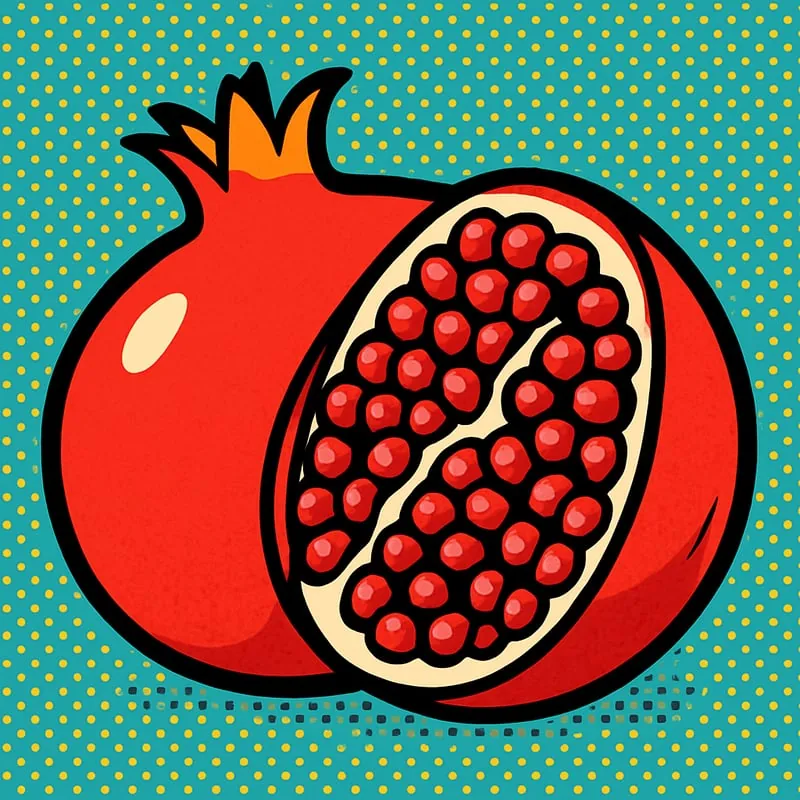
Crack open a pomegranate and you find a honeycomb of bright red seeds packed inside white spongy walls. The juicy ruby part around each seed is called an aril. The number of seeds in a single fruit can range from around 200 to over 1,400, depending on the size and variety.
Pomegranates are one of the oldest fruits we eat. People have been growing them for at least 5,000 years across Iran, the Middle East, and India. The name comes from medieval Latin and means “seeded apple.” In many cultures the fruit is a symbol of luck and good fortune because of all those seeds.
That hidden-jewel design isn’t just for show. In the wild, the bright red color and sweet-sour juice attract birds and small animals, which eat the arils and spread the seeds. The leathery outer rind protects the fruit so well that pomegranates can last for months without rotting.