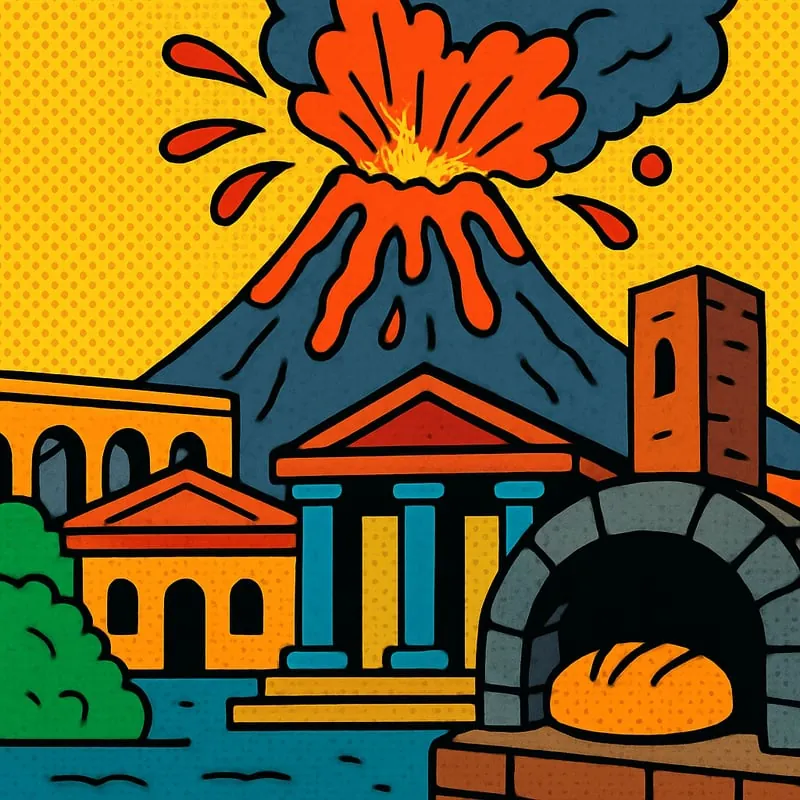
In 79 CE, the volcano Mount Vesuvius erupted in southern Italy. Within hours it buried two Roman cities - Pompeii and Herculaneum - under up to 20 feet of hot ash and pumice. The cities vanished from maps. They stayed lost and forgotten for nearly 1,700 years.
When workers accidentally rediscovered Pompeii in 1748, they uncovered an entire Roman city frozen at a single moment. Loaves of bread were still in bakery ovens. Wine jars stood in shops. Election posters were painted on walls. Graffiti - including kids’ rude drawings - survived perfectly preserved beneath the ash.
The most haunting finds are the people. Bodies decayed over centuries, leaving body-shaped hollows in the hardened ash. Archaeologists pour plaster into those spaces to create casts that show exactly how people fell - hugging family members, holding pets, curled up trying to breathe. Pompeii gave history a perfect time capsule.