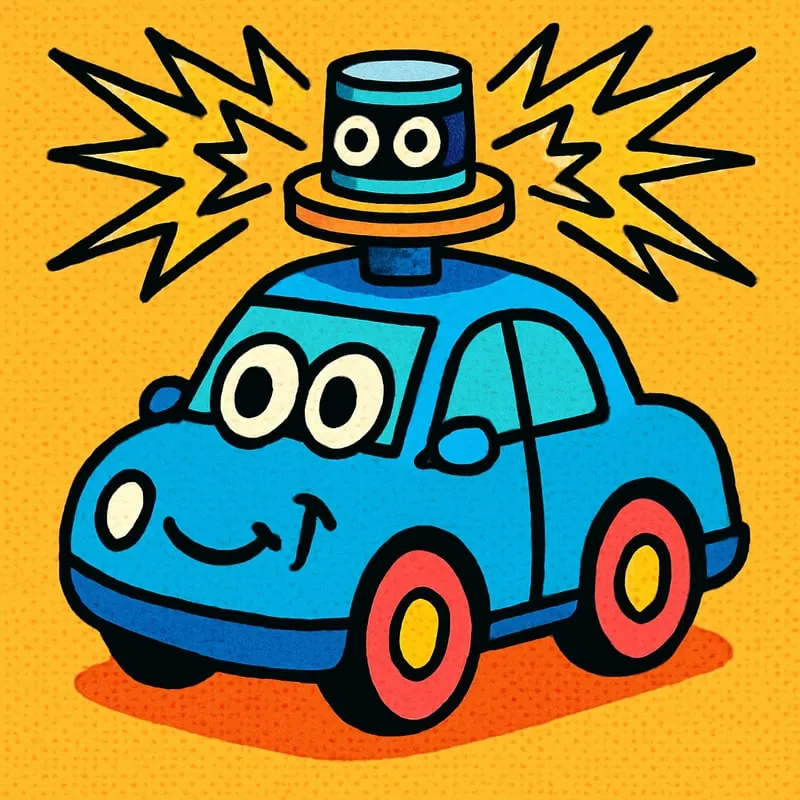
A self-driving car has to do something very hard: understand the entire road around it without a human brain. To do that, it uses several types of sensors at once. The most distinctive is LiDAR, a spinning unit often perched on the roof that fires millions of invisible laser pulses every second and measures how long each one takes to bounce back.
Those bounces build a detailed 3D map of every car, person, tree, and curb nearby - even in pitch darkness. Cameras handle things LiDAR can’t, like reading stop signs, traffic lights, and lane markings. Radar tracks the speed of other vehicles, and ultrasonic sensors handle close-up parking moves.
All that data flows into the car’s computer dozens of times every second. Software predicts what nearby drivers and pedestrians might do next and decides how to steer, brake, and accelerate. The hardest part isn’t seeing the road. It’s reliably understanding weird human behavior - a delivery driver double-parked, a kid chasing a ball, a cyclist running a red light.