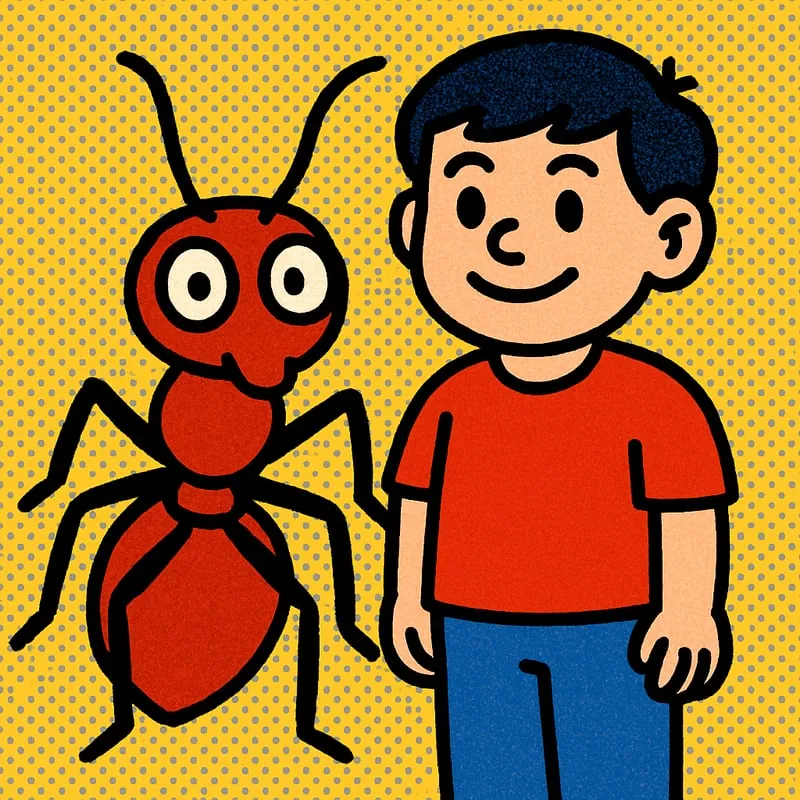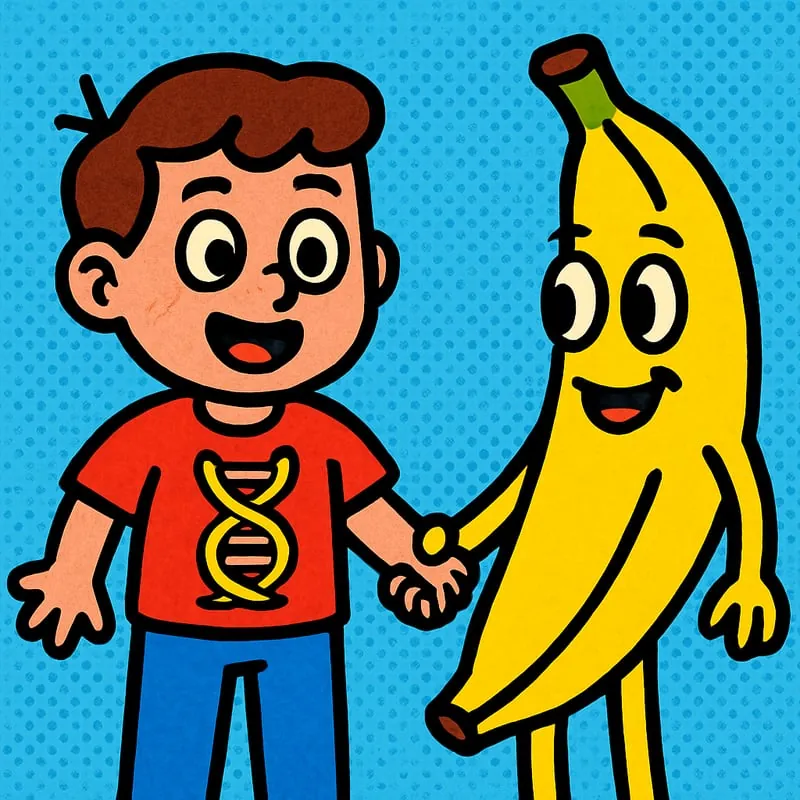
When people hear that humans share about 98% of their DNA with chimpanzees, they’re often surprised. It’s even more surprising that you share about 85% of your DNA with mice, 60% with fruit flies, and that even a banana has a counterpart for many of your most basic genes.
The reason is that all life on Earth descends from a common ancestor that lived around 4 billion years ago. As different branches of the family tree split off - first single cells from single cells, then plants from animals, then vertebrates from invertebrates, then mammals from reptiles - they each kept inheriting the same basic genetic toolkit. Genes for things like making proteins, repairing damaged DNA, breaking down sugar for energy - these are needed by almost every living thing, so they got passed down to virtually all of us.
The often-repeated “50% banana DNA” figure is a fun simplification: when scientists sequenced the banana genome, they found about 60% of its genes have a recognisable human counterpart, and those shared genes are about 40% similar at the protein level. Bananas need to do many of the same fundamental biological tasks you do: make proteins, repair their DNA, generate ATP, reproduce cells. The other genes are what make you a multicellular mammal that walks and thinks instead of a stationary fruit that hangs from a tree.