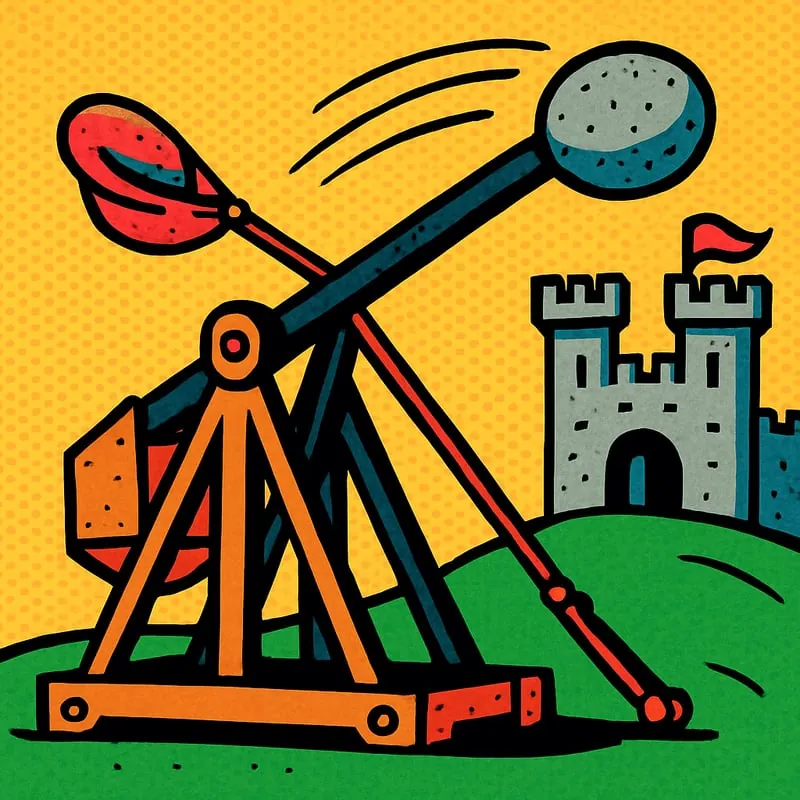
If you were trying to break into a medieval castle, you needed something bigger than a sword. Enter the trebuchet - a giant wooden machine that worked like a seesaw. A heavy counterweight on one short end fell down, swinging the long end up and slinging a heavy projectile out of a leather pouch.
A big trebuchet could hurl stones weighing over 300 pounds for the length of a football field. The biggest ones were nicknamed things like “War Wolf” and “Bad Neighbor.” They could pulverize stone walls, smash gates and terrify defenders. Building one took weeks of carpentry - and often had to happen right in front of the castle being attacked.
Trebuchets didn’t just throw rocks. Attackers sometimes loaded them with dead animals, beehives or even diseased human bodies to spread plague over the walls. It was one of history’s earliest forms of biological warfare. Gunpowder cannons eventually made trebuchets old-fashioned in the 1400s.