Most things in the world are clearly alive or clearly not alive. A frog is alive. A rock isn’t. Viruses, though, are different. They sit awkwardly between the two, and even biologists can’t agree on which side they belong to.
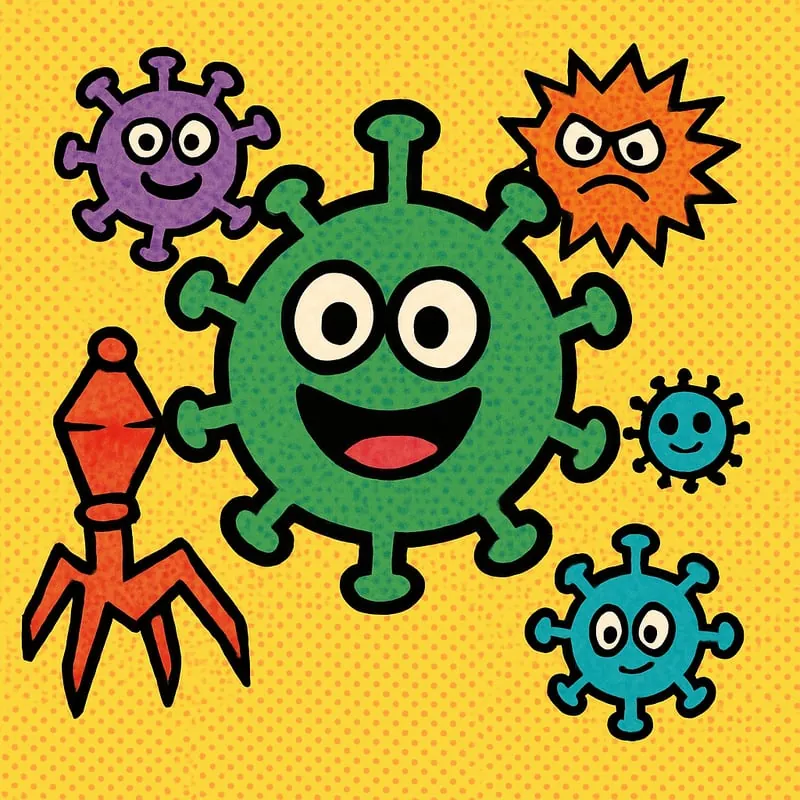
On the “alive” side: viruses have genetic material - DNA or RNA - that they pass on to copies of themselves. They evolve over time. They can be diverse, complex, and finely-tuned to their environment. By many usual definitions of life, that should be enough.
On the “not alive” side: viruses can’t reproduce on their own. They don’t have their own metabolism. They aren’t made of cells. They don’t do anything at all unless they get inside a host cell, where they hijack the cell’s machinery to make more copies of themselves. Outside a host, a virus is essentially just a chemistry experiment - proteins around DNA - that does nothing.
So is a virus a kind of incomplete life form, or just a super-complicated chemical? Different biologists give different answers. It’s one of the genuine puzzles of biology, sitting right at the edge of what “alive” really means.