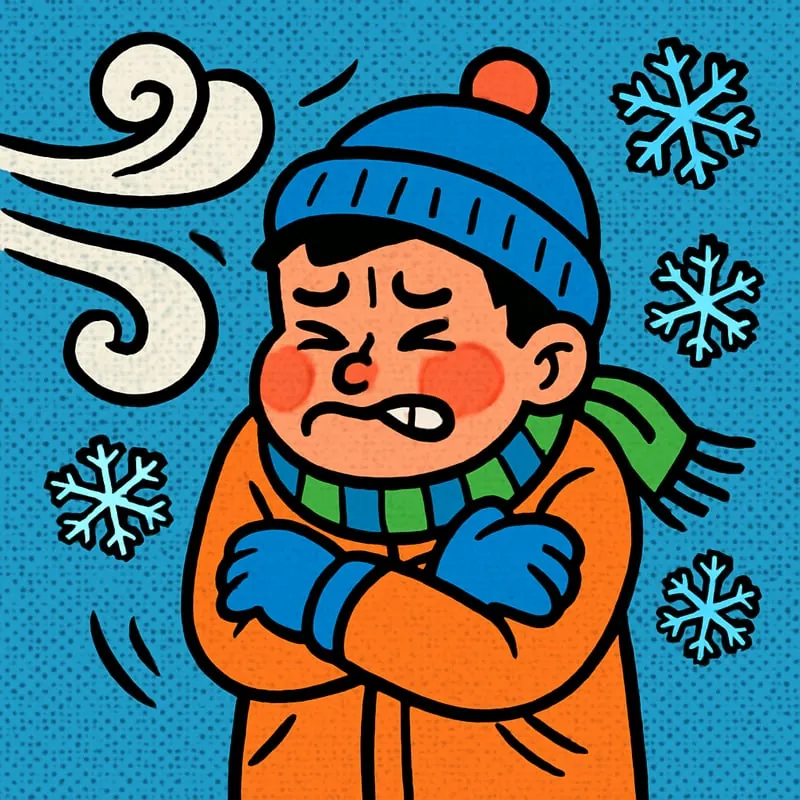
Cold air is bad enough on its own. Add wind and it feels much, much worse. That’s wind chill - and it’s not just in your head. It’s a measurable effect on how your body loses heat.
When you stand still in cold air, a thin layer of warm air builds up right against your skin, kind of like an invisible coat of insulation. Wind blows that warm layer away faster than your body can replace it, so your skin loses heat much more rapidly. The result: you feel colder than the actual air temperature, and you’re more at risk of frostbite.
The U.S. National Weather Service uses a wind chill formula to translate temperature and wind speed into a “feels like” number. For example: 30°F with a 30 mph wind has a wind chill of about 15°F - your skin will lose heat as if it were 15°F. The colder the air and the faster the wind, the bigger the difference. At extreme combinations, wind chill can mean frostbite within minutes. Note: wind chill only affects living things that need to maintain warmth. A car or thermometer in the same wind isn’t any colder than the air itself.