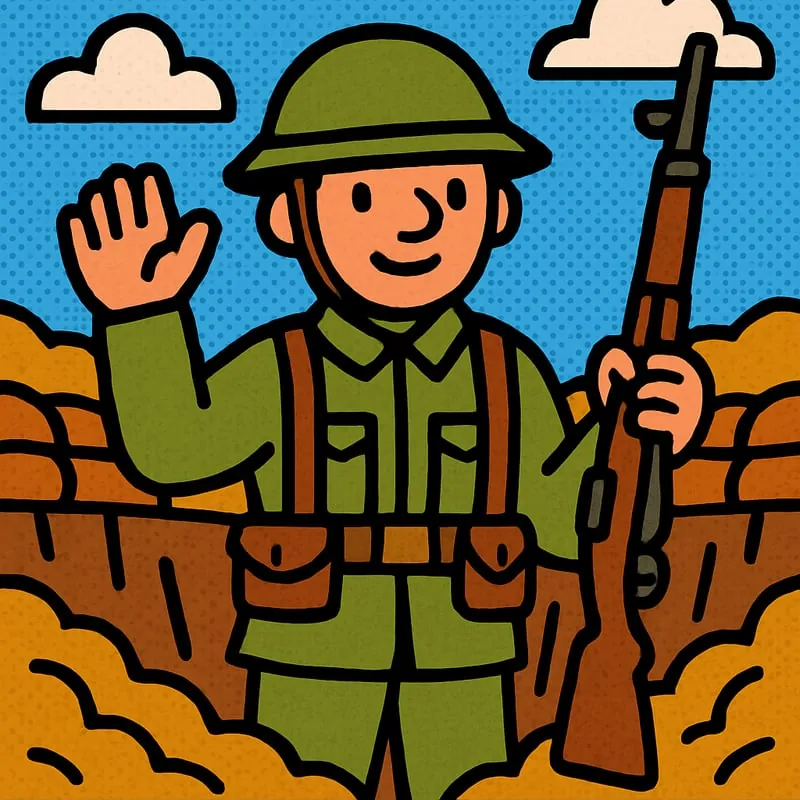
When World War I started in 1914, generals expected the fighting to be over by Christmas. Instead, the two sides got stuck. After early battles, soldiers started digging defensive trenches - and once those trenches connected, neither side could move forward. The Western Front froze into 475 miles of muddy zigzag ditches stretching from the North Sea all the way to the Swiss Alps.
Life in the trenches was rough. Soldiers shared their narrow dirt homes with rats, lice and freezing puddles. Each side had three rows: a front-line trench, a support trench behind it, and a reserve trench further back. Between the enemy trenches was a strip of empty land called “no man’s land,” tangled with barbed wire.
Soldiers usually rotated in and out every few days. A whole generation of young men spent the war in those ditches - sometimes for over four years. Some sections were so carefully built with wooden walls and shelters that preserved bits can still be visited today as museums.