Yeast doesn’t look like a fungus. It’s not a mushroom or a fuzzy mould - just a fine beige powder or squishy block. But each particle is packed with billions of microscopic single-celled fungi, all temporarily asleep, waiting for water and food.
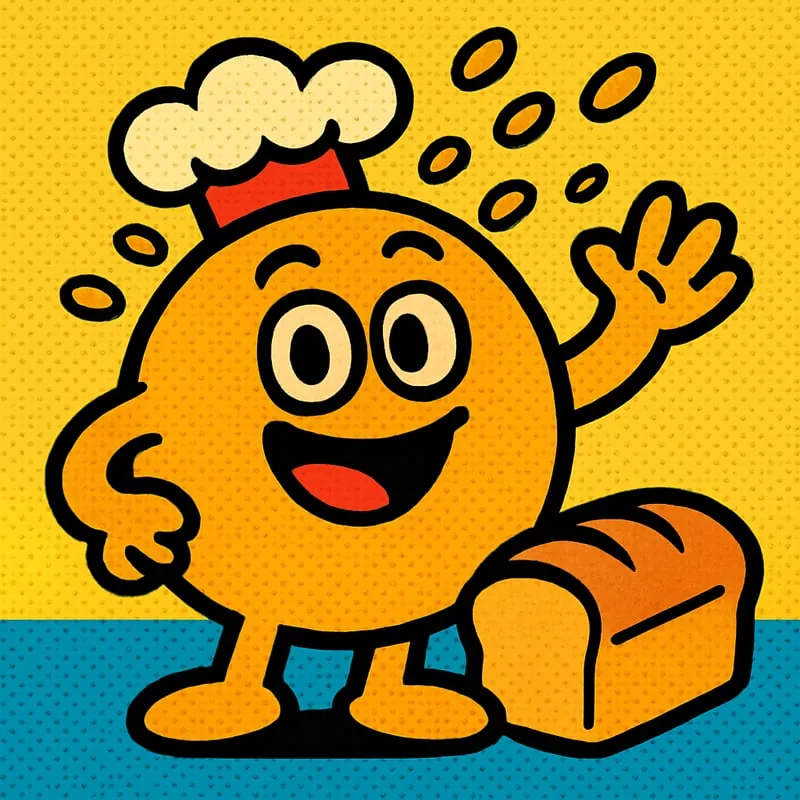
Mix yeast with warm water and a bit of sugar or flour and it wakes up fast. Each cell starts gobbling sugars and breathing out bubbles of carbon dioxide gas. In bread dough, the trapped CO2 bubbles puff up the gluten and make the loaf rise. Every hole in your sandwich is one tiny yeast burp.
Yeast has been doing this same job for humans for at least 4,000 years. Ancient Egyptians used it for bread and beer without knowing what the magic ingredient was. Today there are also genetically engineered yeasts used to make medicines, biofuels and even chocolate flavours.