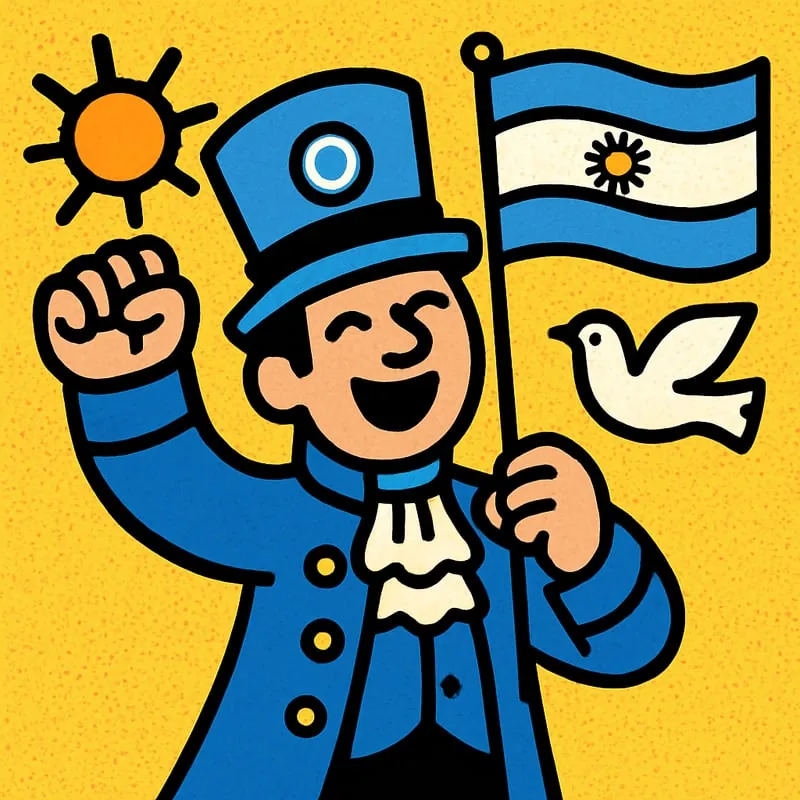
On July 9, 1816, in a modest house in the small inland city of Tucumán, twenty-nine delegates gathered around a long wooden table and signed a document declaring that the United Provinces of South America - the heart of what would become Argentina - were now free of Spanish rule. Outside, crowds packed the dusty streets, waving flags in the new colors of light blue and white. After six years of brutal fighting for independence, Argentina was finally a country.
The road there had been incredibly tough. Spain had ruled the region for nearly 300 years, and the revolution kicked off in 1810 in Buenos Aires. Armies led by heroes like José de San Martín marched across mountains and grasslands, freeing town after town. San Martín later teamed up with Simón Bolívar to help liberate Chile and Peru too. The Tucumán declaration was the official moment, but the war wouldn't fully end for several more years. The original signed document is still kept safe in Argentina's national archive.
Today, July 9 is Día de la Independencia, one of the biggest holidays in Argentina. Schoolchildren reenact the signing, parades roll down Avenida 9 de Julio (the world's widest avenue, named after this very day), and families gather for asado barbecues with grilled steak, empanadas, and dulce de leche desserts. Argentina has since given the world tango music, soccer legends like Lionel Messi, Patagonia's wild glaciers, and Pope Francis. It all started with a roomful of brave delegates and one bold signature.