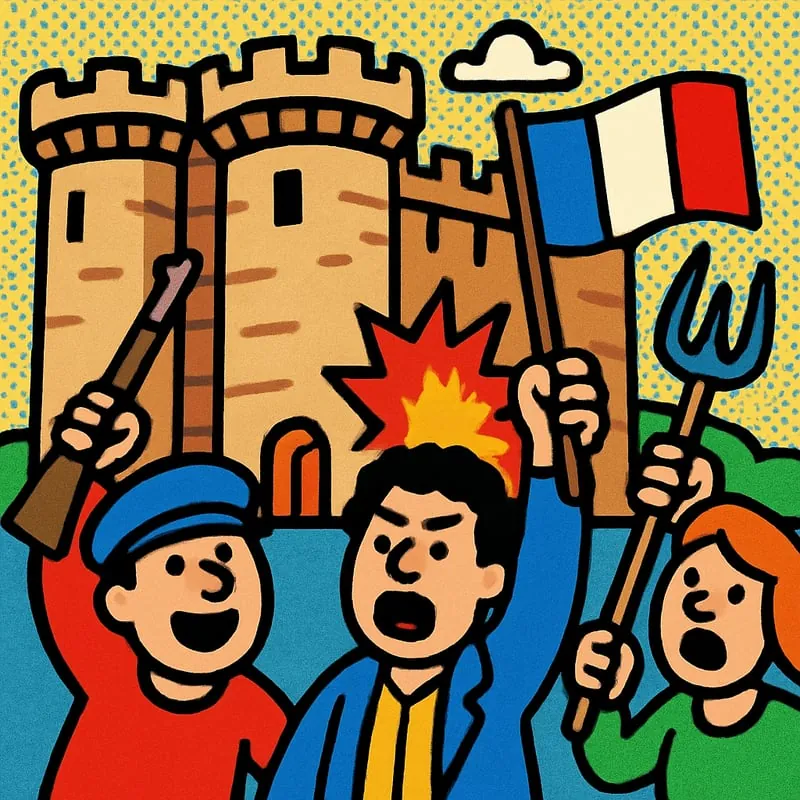
On the hot morning of July 14, 1789, the people of Paris had had enough. Bread was scarce, taxes were crushing, and rumors swirled that King Louis XVI was about to crack down with his army. A huge crowd grabbed pitchforks, swords, and homemade weapons and marched on the Bastille - a hulking eight-towered fortress on the east side of the city that served as a prison and a giant gunpowder warehouse. To Parisians, the Bastille was a symbol of everything wrong with the king's rule.
The crowd swelled to nearly a thousand. After hours of tense standoff with the soldiers inside, fighting broke out. The drawbridge crashed down, and the crowd surged in. Inside, they freed just seven prisoners - but that hardly mattered. The point was made. The mighty Bastille had fallen. When word reached King Louis XVI later that night, he asked, 'Is it a revolt?' His advisor replied, 'No, sire, it is a revolution.' That advisor was right.
The French Revolution that followed turned France upside down. The old system of kings and nobles was smashed, and a new idea took its place - liberty, equality, and fraternity (meaning brotherhood). Every July 14, France celebrates Bastille Day with the biggest military parade in Europe marching down the Champs-Élysées in Paris, jets streaking red-white-and-blue smoke overhead, fireworks bursting above the Eiffel Tower, and village dances all over the country. The whole world borrowed ideas from this revolution, from democracy to human rights, all sparked by one summer day in Paris.