For 28 years, a concrete wall topped with barbed wire had split the city of Berlin in two. On one side: West Berlin, part of the free democratic West. On the other: East Berlin, controlled by the communist Soviet Union. Families had been separated overnight when the wall went up in 1961. Anyone who tried to escape across it risked their life.
On the evening of November 9, 1989, a confused East German government spokesman announced that travel restrictions had been lifted. He had been handed a note about the new rule but hadn't been told exactly when it took effect. When a reporter asked, he stammered, "As far as I know - effective immediately." That was not actually the plan, but the words went out live on TV.
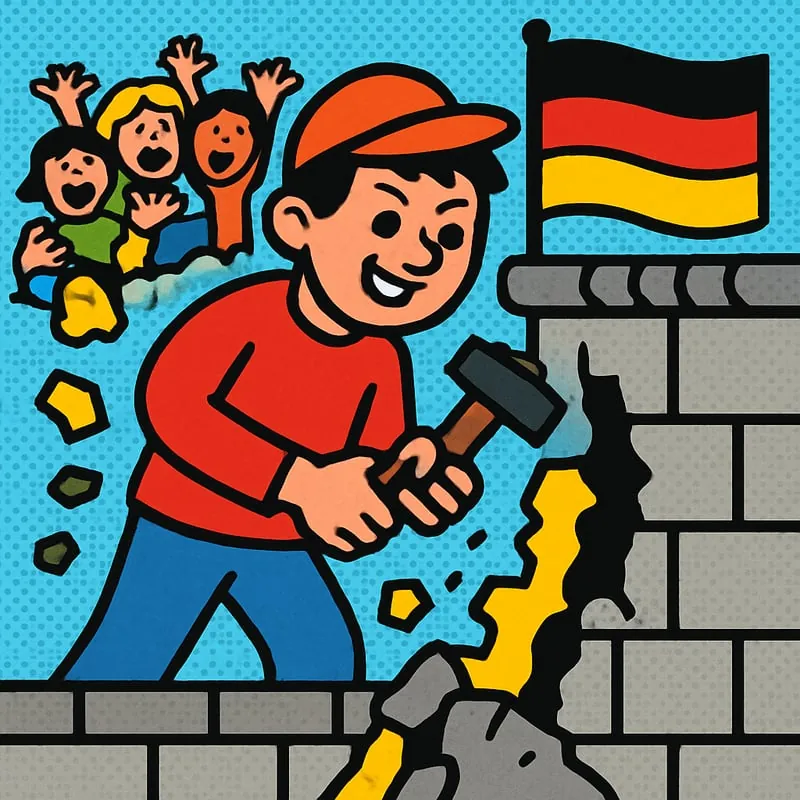
Within hours, tens of thousands of East Berliners showed up at the wall demanding to cross. The young border guards had no orders. After a tense standoff, they simply opened the gates. Strangers from both sides hugged each other on top of the wall. Berliners with hammers and chisels - soon known as "wall woodpeckers" - began breaking off chunks as souvenirs.
Within a year, the two Germanies were officially one country again. The fall of the Berlin Wall is now seen as the moment when the Cold War effectively ended, and it inspired similar peaceful uprisings across Eastern Europe. Pieces of the wall are scattered across museums and private collections around the world today.