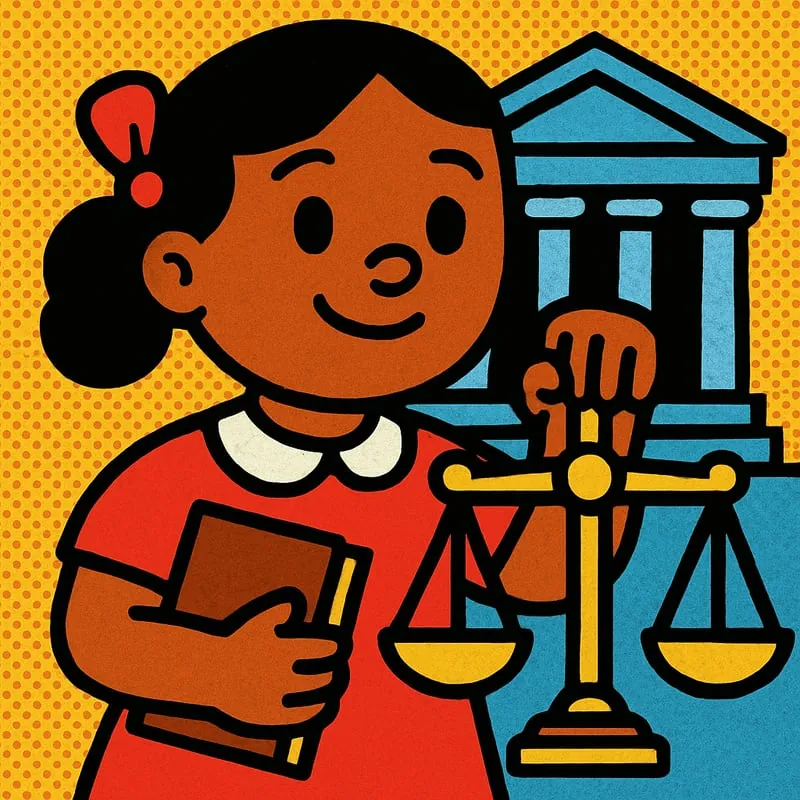
On May 17, 1954, nine men in long black robes walked into the Supreme Court in Washington, D.C., and announced a decision that would shake the country. Chief Justice Earl Warren read it aloud: In the field of public education, the doctrine of separate but equal has no place. Just like that, the rule that had let many American schools keep Black and white children in separate buildings was struck down. The case was called Brown v. Board of Education.
The lawsuit was named for Oliver Brown, a father in Topeka, Kansas. His daughter Linda, a third grader, had to ride a bus across town to a Black school when there was a white school just blocks from her house. Brown and 12 other families sued. Their lead lawyer was Thurgood Marshall, who would later become the first Black Supreme Court justice himself. He argued that separate schools were never really equal - Black schools usually had older books, worse buildings, and less money - and that splitting kids up by color was harmful in itself.
The ruling was unanimous, nine to zero, which made it especially powerful. But change came slowly. Many states resisted. In 1957, federal troops had to escort nine Black students into Central High School in Little Rock, Arkansas, while angry crowds shouted at them. Schools in some Southern states didn't really integrate for over a decade. Still, the Brown decision was the legal earthquake that civil rights leaders had been waiting for. It opened the door for the marches, sit-ins, and laws of the 1950s and 1960s that would finally start to change America for everyone.