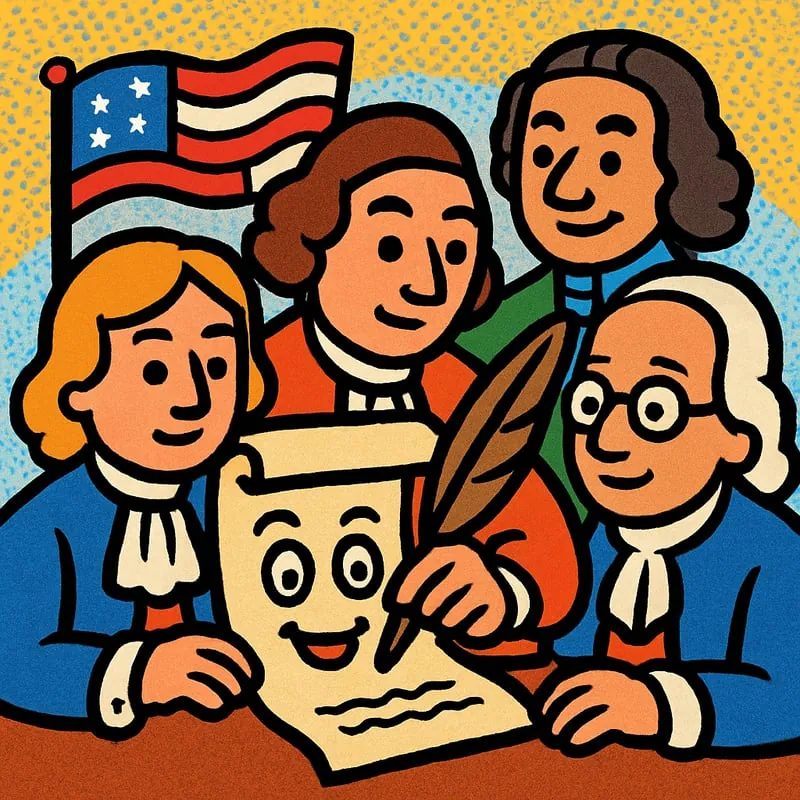
On August 2, 1776, in a quiet room inside the Pennsylvania State House in Philadelphia, a parade of men lined up to sign their names to one of the boldest documents in history. The Declaration of Independence had actually been adopted on July 4th, almost a month earlier, but the fancy handwritten copy on parchment wasn't ready until now. So this was the day most of the signatures actually went on the page.
Fifty-six men eventually signed. John Hancock from Massachusetts, the president of the Continental Congress, went first and made his signature huge, supposedly so King George III could read it without his spectacles. Benjamin Franklin, white-haired and seventy years old, signed too, joking that they must all hang together or they'd surely hang separately. The youngest signer was 26-year-old Edward Rutledge. The oldest was Franklin himself.
Those men were committing what the British called treason, and if America lost the Revolutionary War, their names on that paper could cost them their lives. They knew it and signed anyway. The Declaration declared that all people are created equal and have the right to life, liberty, and the pursuit of happiness. Today the original parchment lives in a special case at the National Archives in Washington, D.C. The signatures have faded, but the idea hasn't. Almost every modern democracy borrows from the words those 56 men wrote down on that warm August day.