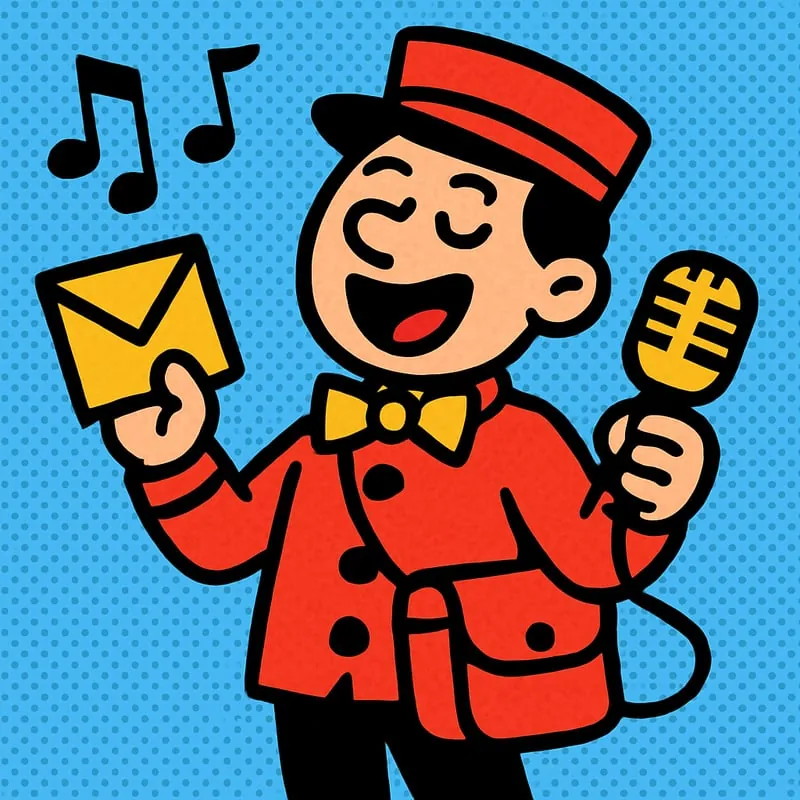
On February 10, 1933, a Western Union messenger boy in New York City rang a doorbell and, instead of just handing over a paper telegram, opened his mouth and sang the message. The recipient was a famous singer named Rudy Vallee, and it was his birthday. A telegraph operator named Lucille Lipps had been asked to deliver the greeting in a fun way, so she warbled it over the phone line. Just like that, the singing telegram was born.
Western Union loved the reaction and turned it into a service anyone could buy. For just a few cents, you could send a friend a birthday wish, a love note, or a goofy joke, performed by a stranger in a sharp uniform right at their door. During the 1930s, '40s, and '50s, singing telegrams became huge. Soldiers off at war sent them to sweethearts back home. Office workers pranked their bosses. Some performers dressed up as gorillas, cowboys, or chickens to deliver the tune.
When phones, faxes, and finally text messages and emojis took over, the singing telegram faded, but it didn't fully disappear. Some companies still send costumed singers to surprise people at birthday parties and weddings. Every time you tap out a goofy GIF or record a video greeting for grandma, you're really continuing what Lucille Lipps started in 1933. Long before emojis, somebody figured out that a plain old message hits way harder when it shows up wearing a top hat and singing off-key.