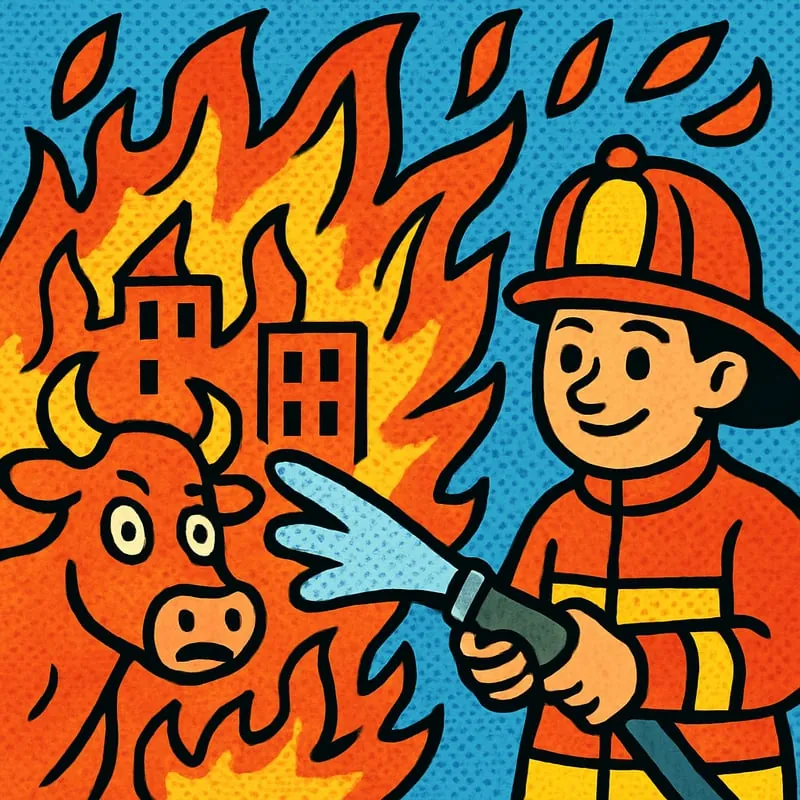
On the evening of October 8, 1871, a small fire flared up in a barn behind a cottage on DeKoven Street in Chicago. It had been a dry, windy summer. The whole city was built mostly out of wood - wooden houses, wooden sidewalks, even wooden streets. Within minutes the flames were leaping from roof to roof. By the time the city's exhausted firefighters arrived, the blaze was already too big to stop.
For 36 hours the fire roared north and east, jumping the Chicago River twice and devouring everything in its path. By the time rain finally began to fall on October 10, more than three square miles of the city were gone. About 17,500 buildings had burned. Almost 100,000 people - nearly a third of Chicago's residents - had lost their homes. For years, legend blamed a cow belonging to a woman named Catherine O'Leary, claiming it kicked over a lantern in the barn. The story was made up by a newspaper reporter who later admitted he invented it. The real cause has never been proven.
Out of the ashes, Chicago rebuilt itself in a brand-new way. The city passed strict fire-safety codes: no more wooden sidewalks, no more wooden roofs in downtown, and tall stone-and-iron buildings instead. Architects flocked to the city to design these fireproof towers, and within twenty years Chicago had invented the modern skyscraper. The disaster that nearly destroyed the city ended up changing how cities everywhere are built.