On June 20, 1782, after six long years of arguments, sketches, and rewrites, the Continental Congress finally approved a design that the brand-new United States could call its own. It was the Great Seal - a kind of official stamp used to make important government documents legal. The country had been free from Britain since 1776, but Congress had been so busy fighting a war and writing laws that the seal had been pushed to the bottom of the pile.
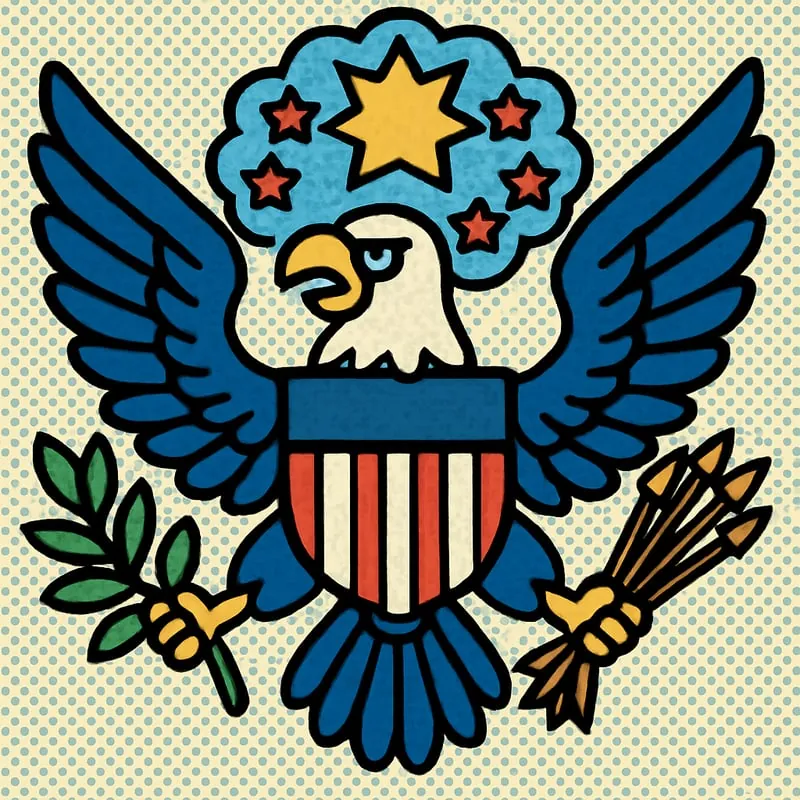
Three different committees took a turn at designing it. Benjamin Franklin wanted Moses and the parting of the Red Sea. Thomas Jefferson wanted the ancient children of Israel led by a cloud. John Adams suggested Hercules. None of those ideas stuck. The final design was put together by Charles Thomson, the secretary of Congress, who borrowed bits from all three failed plans and added his own. The front shows a bald eagle holding 13 arrows in one talon and an olive branch in the other - a symbol that America prefers peace but is ready to defend itself. The eagle's beak holds a banner that reads E Pluribus Unum: "Out of many, one." The back of the seal has a strange unfinished pyramid with a glowing eye floating above it.
The Great Seal still gets used today - about 2,000 to 3,000 times a year, mostly to stamp treaties and documents from the president. It's also printed on the back of every U.S. one-dollar bill. Next time you see a dollar, flip it over and look closely. That eagle, that pyramid, and that floating eye have been quietly working since the days of George Washington.