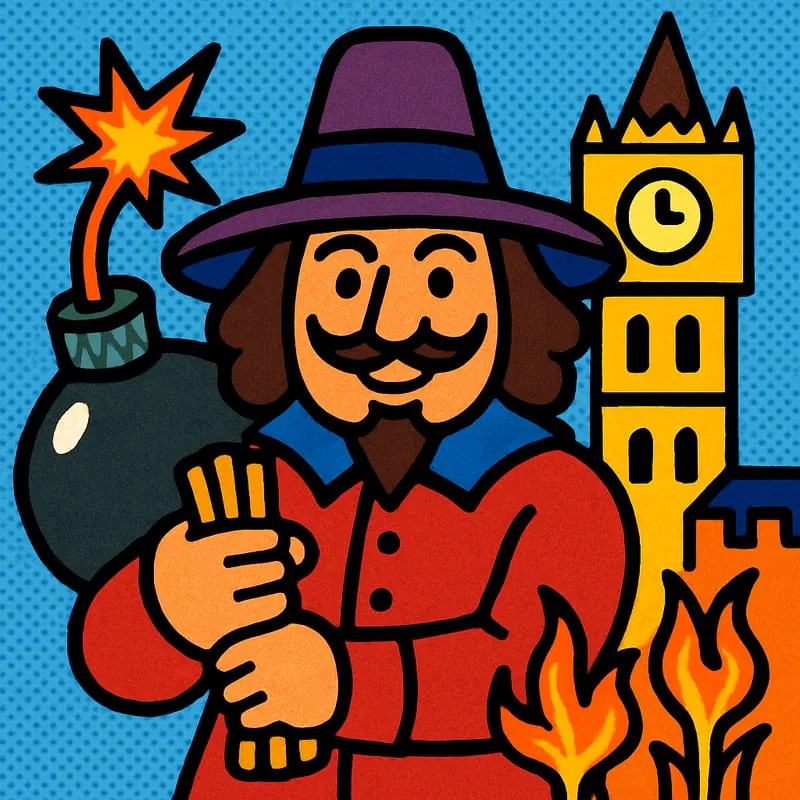
Just after midnight on November 5, 1605, a man calling himself John Johnson was caught in a basement under England's House of Lords standing next to 36 barrels of gunpowder. His real name was Guy Fawkes, and the plan was huge: blow up Parliament that very morning while King James I and almost every important leader in England were inside. The 36 barrels held enough explosives to flatten the building and shatter windows across half of London.
The plot had been organized by a Catholic gentleman named Robert Catesby, who was furious that the new king had failed to give English Catholics more freedom. Thirteen conspirators rented a coal cellar right under Parliament and slowly smuggled the barrels in, hiding them under firewood. But someone in the group sent an anonymous letter warning a Catholic lord to skip the opening ceremony. The lord showed the letter to the king, guards searched the cellar, and Fawkes was found waiting with matches and a slow fuse in his pocket.
That same night, Londoners lit bonfires to celebrate the king's escape, and the tradition stuck. Every November 5th, Britain still celebrates Bonfire Night with fireworks, sparklers, and toffee apples, and kids burn straw figures called Guys in the flames. A famous old rhyme begins, Remember, remember the fifth of November. The plot failed in less than a day, but more than 400 years later, the fizz of a sparkler and a sky full of fireworks still carry the memory of one of history's most dramatic near-misses.