On May 30, 1431, a 19-year-old girl in chains stood in the marketplace of Rouen, France, holding a small wooden cross. Just two years earlier, Joan of Arc had been a farm kid in the village of Domrémy who said she heard voices telling her to save France. Almost no one believed her - at first.
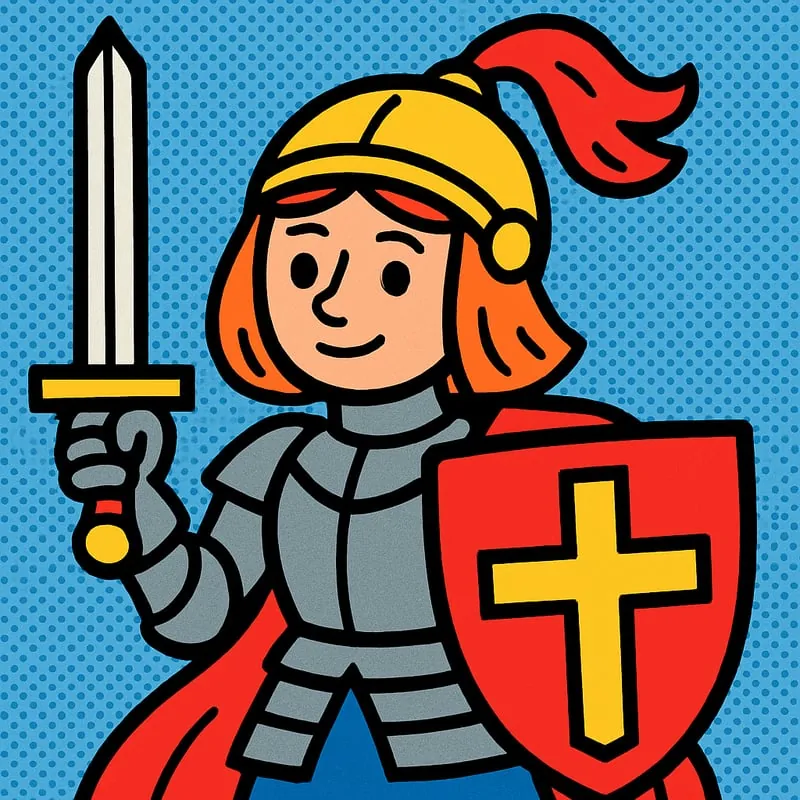
But Joan kept knocking on doors. She convinced the future king, Charles VII, to give her armor, a banner, and an army. In May 1429, at only 17, she led French soldiers to lift the siege of Orléans, a city the English had surrounded for months. She rode at the front in shining white armor. Town after town fell back into French hands, and that July she stood beside Charles as he was crowned king at Reims Cathedral. Then her luck turned. She was captured by enemy soldiers, sold to the English, and put on trial by church judges who wanted her gone. They asked her trick questions for months. She answered most of them better than the lawyers expected.
Twenty-five years after her death, a new trial cleared her name. Five hundred years after that, in 1920, she was made a saint. Today she shows up on coins, in paintings, in plays, in video games, and on the flags of French regiments. A teenager from a tiny village changed the map of Europe - and proved that being young is no reason to wait your turn.