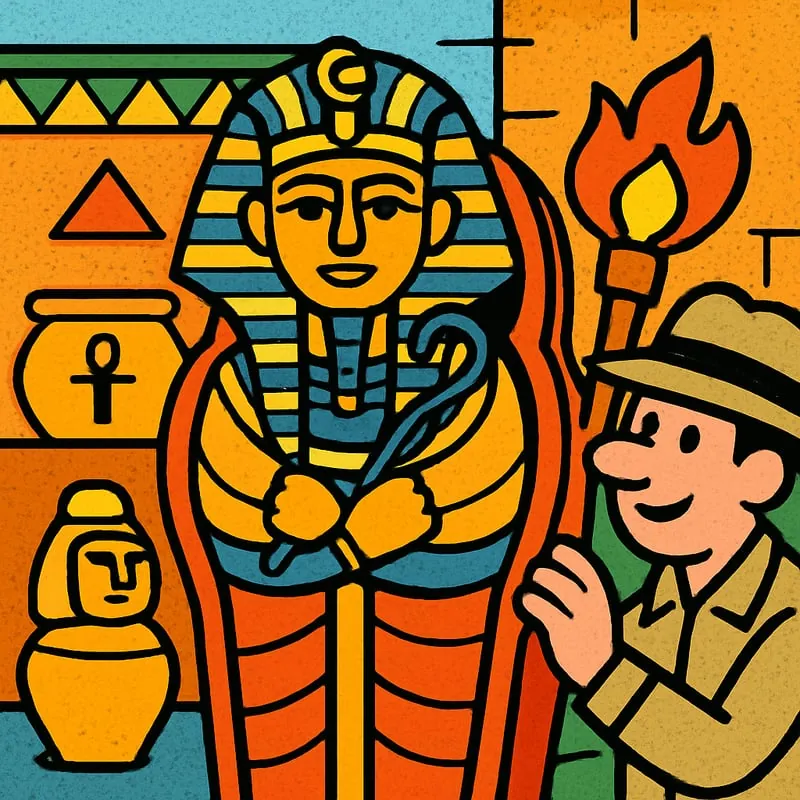
On February 16, 1923, a British archaeologist named Howard Carter stood in a hot, dusty corner of Egypt's Valley of the Kings, holding a chisel and trying to keep his hands from shaking. Months earlier, his team had stumbled on a hidden staircase under the sand and traced it to a sealed door. Now, with rich sponsor Lord Carnarvon at his side, Carter cracked open the inner chamber of a tomb that had been undisturbed for more than 3,000 years.
Inside lay the burial place of Tutankhamun, a teenage pharaoh who'd died around age 19. Carter peered in by candlelight and saw treasure stacked to the ceiling: golden chariots, ebony statues, alabaster jars, board games, sandals, jewelry, even a trumpet that still worked. At the heart of it all was a solid gold coffin holding the boy king's mummy, his face covered by a glittering blue-and-gold mask that would become one of the most famous objects on Earth.
The discovery set off a worldwide craze for everything Egyptian. Fashion designers copied the patterns, candy companies named bars after Tut, and people lined up at museums to glimpse pieces of the find. It also gave scientists their best look at how ancient Egyptians lived, prayed, and prepared their pharaohs for the afterlife. A hundred years later, King Tut's golden mask still tours the world and pulls huge crowds, all because a stubborn archaeologist refused to give up on a tomb everyone else said wasn't there.