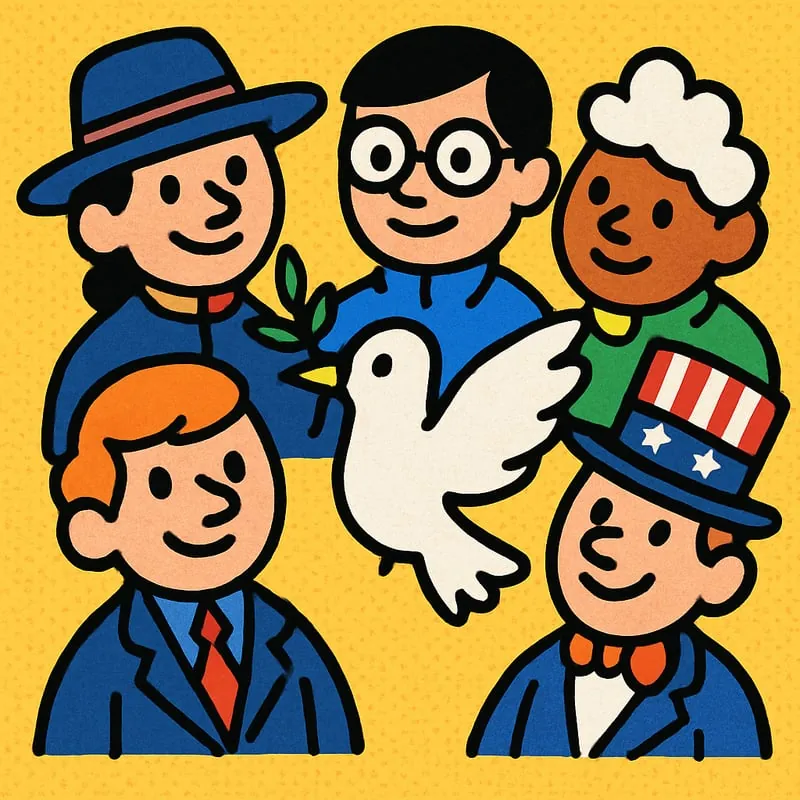
On 10 January 1920, in a grand hall in Geneva, Switzerland, diplomats from 42 countries sat down at long tables for the very first meeting of the League of Nations. World War One had ended only a year earlier. Around 16 million people had died in the trenches and at sea. The diplomats wore dark suits and serious faces. The idea was simple and bold - countries would talk through their problems instead of shooting at each other.
The League had been the dream of U.S. President Woodrow Wilson, but in a strange twist the United States never actually joined. The American Senate voted it down. Still, the League got to work. It helped settle a border dispute between Sweden and Finland. It returned hundreds of thousands of prisoners of war to their families. It tackled diseases like malaria and stopped a deadly outbreak of typhus in Eastern Europe. It also went after slave traders and child labour.
But when really big bullies started ignoring the rules in the 1930s - Japan invading Manchuria, Italy invading Ethiopia, Germany rearming - the League had no army to stop them, and the dream began to crack. World War Two finished it off. Yet the idea survived. In 1945 the world's countries tried again with a stronger group: the United Nations. Today's UN, with its 193 member countries, blue helmets, and humanitarian missions, is basically the League's grandchild - born from that quiet first meeting in Geneva.