On February 29, 1692, magistrates in the village of Salem, Massachusetts, signed three arrest warrants that would set off one of the strangest chapters in American history. A few weeks earlier, a small group of young girls, including the local minister's daughter and niece, had started behaving very oddly, screaming, twitching, and saying invisible people were pinching them. A doctor couldn't find anything physical wrong, so he gave the answer most colonists feared most: witchcraft.
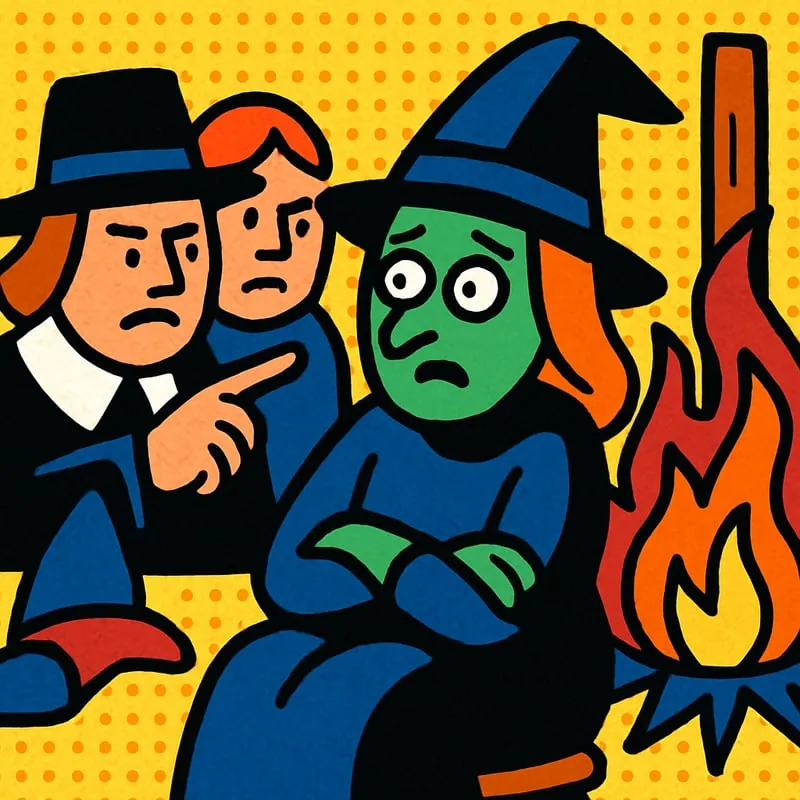
Under pressure to name who was hurting them, the girls pointed at three women. Sarah Good was a poor wanderer who begged door to door. Sarah Osborne was sick and rarely went to church. Tituba was an enslaved woman from Barbados who worked in the minister's home. All three were dragged to the meetinghouse and questioned in front of hundreds of villagers. Soon more accusations flew, and over the next year, around 200 people in and around Salem were accused of witchcraft. Nineteen were hanged, one was crushed under heavy stones, and others died in jail.
Within about a year, even the colony's leaders realized the trials had gone terribly wrong. Judges later apologized, and the colony eventually paid the families of victims. Today historians think the panic was a mix of village quarrels, religious fear, and possibly even bad food. The Salem witch trials are now studied in schools as a warning about what happens when fear takes over fairness, and a reminder that even leap day, February 29, can leave a long mark on history.