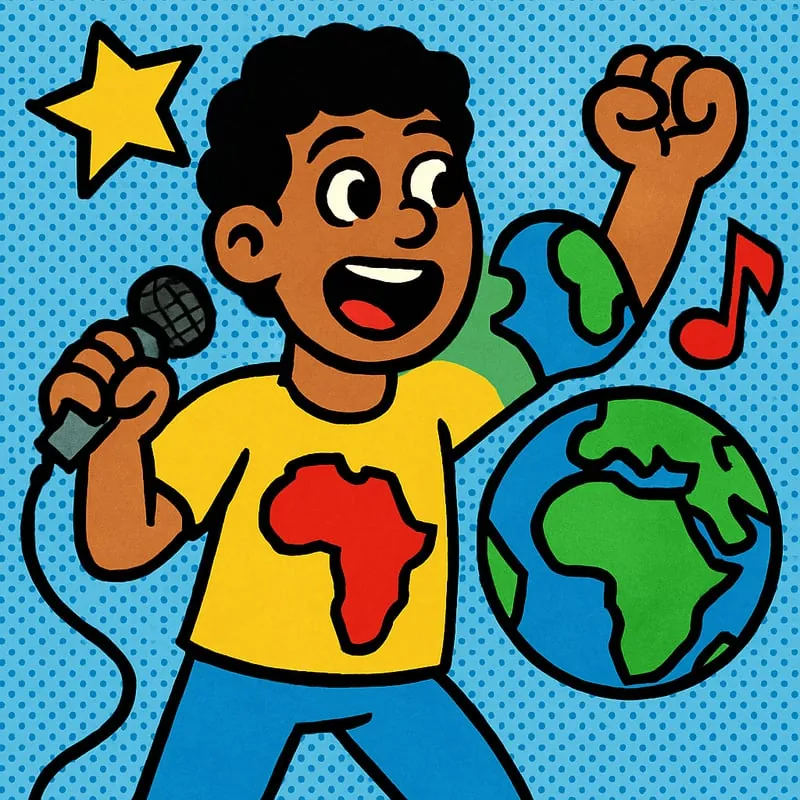
On July 13, 1985, the biggest concert in history took place on two continents at once. In London's Wembley Stadium, 72,000 fans screamed as Queen, David Bowie, U2, Elton John, and Paul McCartney took the stage. At the same time, in Philadelphia's JFK Stadium, 90,000 more rocked out to Madonna, Bob Dylan, Tina Turner, and a Led Zeppelin reunion. The concert was called Live Aid, and it was beamed by satellite to nearly 2 billion people in 150 countries - almost half the planet was watching.
The man behind it all was Bob Geldof, the lead singer of an Irish band called the Boomtown Rats. He had seen news reports about a terrible famine in Ethiopia, where millions were going hungry. Geldof decided rock and roll could help. He spent months calling every famous musician he knew, twisting their arms until they agreed to play for free. Phil Collins did something nobody had ever done before - he played in London, then jumped on a supersonic Concorde jet across the Atlantic to play in Philadelphia the same day. Queen's 21-minute set, led by Freddie Mercury bouncing the entire stadium up and down with claps and 'eh-oh' chants, is still called the greatest live performance ever.
Live Aid raised around 127 million dollars for famine relief and changed the way the world thought about charity. It inspired massive benefit concerts ever since, from Live 8 to Global Citizen Festival. One Irish singer's frustration plus one summer afternoon equaled music history - proof that a song and a stage can move mountains, and millions of people, all at once.