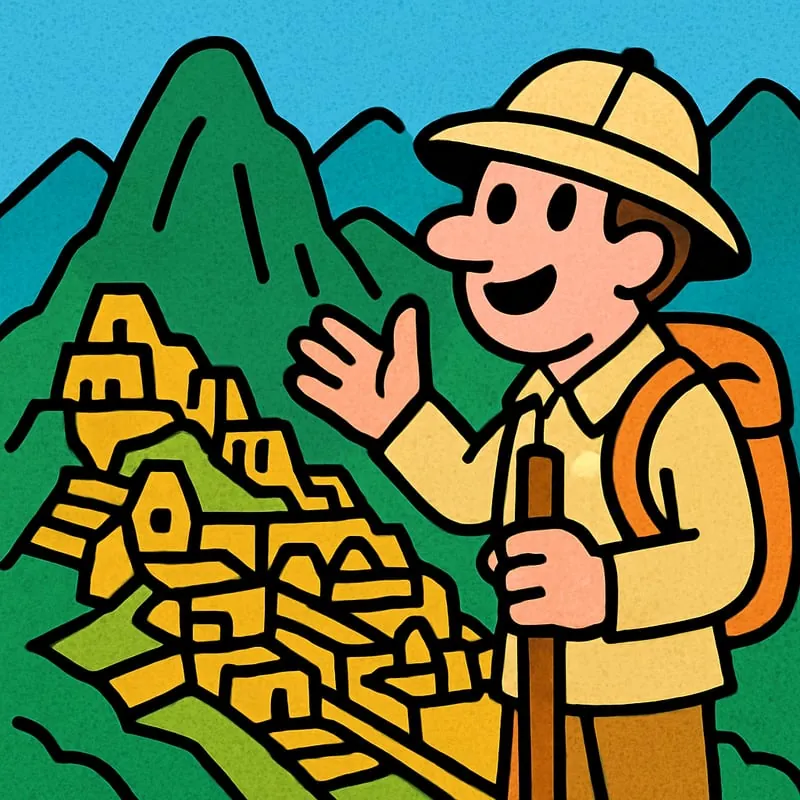
On July 24, 1911, an American history professor from Yale named Hiram Bingham III hiked up a steep, jungle-covered Andean ridge in Peru. He was 8,000 feet above sea level, sweating in the thin mountain air, when an 11-year-old local boy named Pablito Álvarez led him to a stunning sight: a hidden city of carved gray stones, terraces, fountains, and temples, swallowed by ferns and trees. Bingham was looking at Machu Picchu, an ancient Inca city built around 1450 and abandoned about a hundred years later.
Bingham didn't really 'discover' Machu Picchu - local Quechua families had known about it all along and were even farming on its terraces. But Bingham was the one who brought the city to the world's attention. He returned with archaeologists and photographers, cleared away centuries of vines, and published articles and photos in National Geographic that made the lost city famous. The Inca had built Machu Picchu without using iron tools, the wheel, or mortar - every stone was hand-cut so precisely that you can't slip a credit card between them, even after centuries of earthquakes.
Today, Machu Picchu is one of the New Seven Wonders of the World and a UNESCO World Heritage Site. About 1.5 million visitors trek up its winding paths each year, often hiking the four-day Inca Trail through cloud forests to arrive at sunrise. Llamas wander the terraces. Mist swirls around the temple of the sun. Scientists still study how the Inca grew crops, captured spring water, and timed their year by the stars. Hiram Bingham's hike opened a door to one of the most spectacular places on Earth.