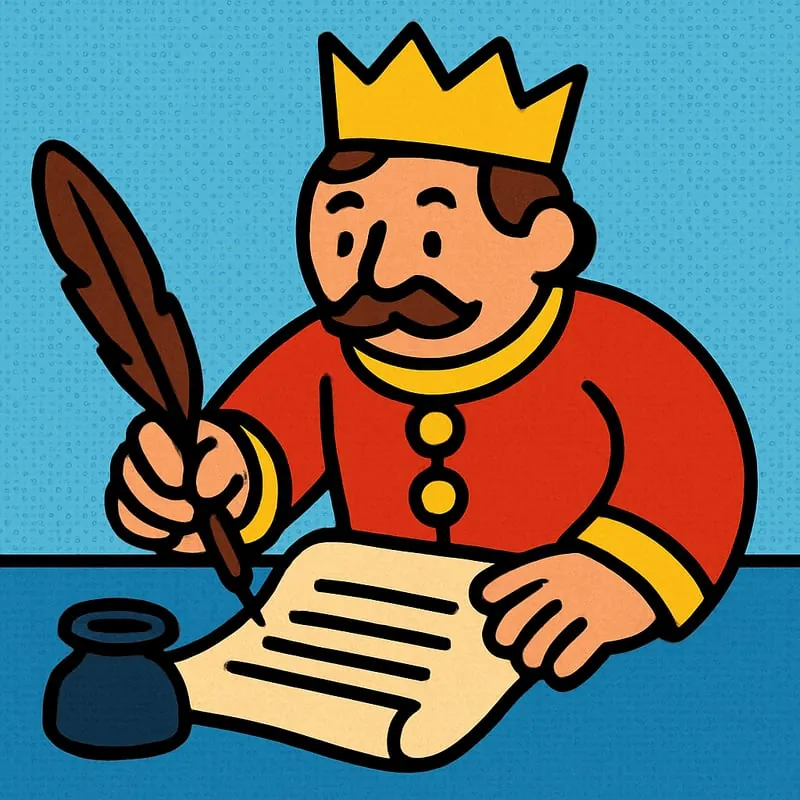
On a muddy meadow called Runnymede beside the River Thames, on June 15, 1215, King John of England climbed off his horse and faced a wall of armored barons. He did not want to be there. His own noblemen had rebelled because of his heavy taxes, his lost wars in France, and his short temper. To stop a full-blown civil war, they shoved a long sheet of parchment in front of him and demanded he press his royal seal into the hot wax. The document was written in Latin and had 63 separate rules. It was called the Magna Carta - "the Great Charter."
The Magna Carta said something nobody had said out loud to an English king before: even the king has to follow the law. It promised that free people could not be locked up without a fair trial. It limited how much the king could tax people. It even protected the rights of the city of London and the freedom of the church. John was furious. As soon as he got home, he asked the pope to cancel it. The pope did. War broke out anyway, and John died of dysentery a year later. But his nine-year-old son, Henry III, brought back a slightly shorter version, and it stuck.
Over the centuries, the Magna Carta became a symbol of fairness all over the world. The American founders read it carefully when they wrote the U.S. Constitution in 1787. So did the writers of the Universal Declaration of Human Rights in 1948. Only four original copies survive - kept under thick glass in Lincoln, Salisbury, and the British Library. The parchment is yellow and crinkled now, but the idea on it is still sharp.