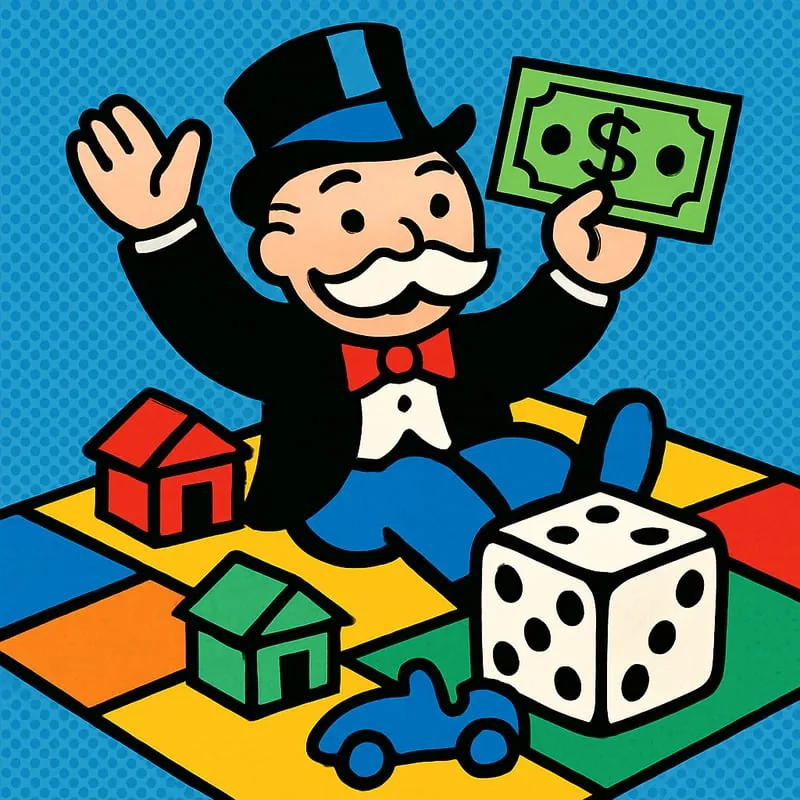
On February 6, 1935, Parker Brothers officially put the board game Monopoly on store shelves across America, complete with its tiny metal tokens, fake money, and grumpy mustachioed mascot. The country was deep in the Great Depression, money was tight, and millions of people were out of work. Suddenly, families could sit at the kitchen table and feel rich, buying up Boardwalk and slapping hotels on Park Place with paper cash.
The game wasn't really invented by Parker Brothers though. Decades earlier, a woman named Lizzie Magie had designed a version called 'The Landlord's Game' to teach people how unfair it was when one player owned everything. Her game got passed around, copied, and changed by friends and families until a man named Charles Darrow tweaked it and sold the rights to Parker Brothers. Lizzie got just $500 and was barely mentioned for years.
Monopoly went on to become one of the best-selling board games in history, printed in more than 40 languages and over 100 countries. It's been used to teach kids math, sneak escape maps to prisoners of war during World War II (the British army really did this), and start about a million family arguments over who landed on what. Almost a century after that 1935 launch, the little tin dog, top hat, and battleship are still racing around the board, proving that a game about fake money can build very real memories.