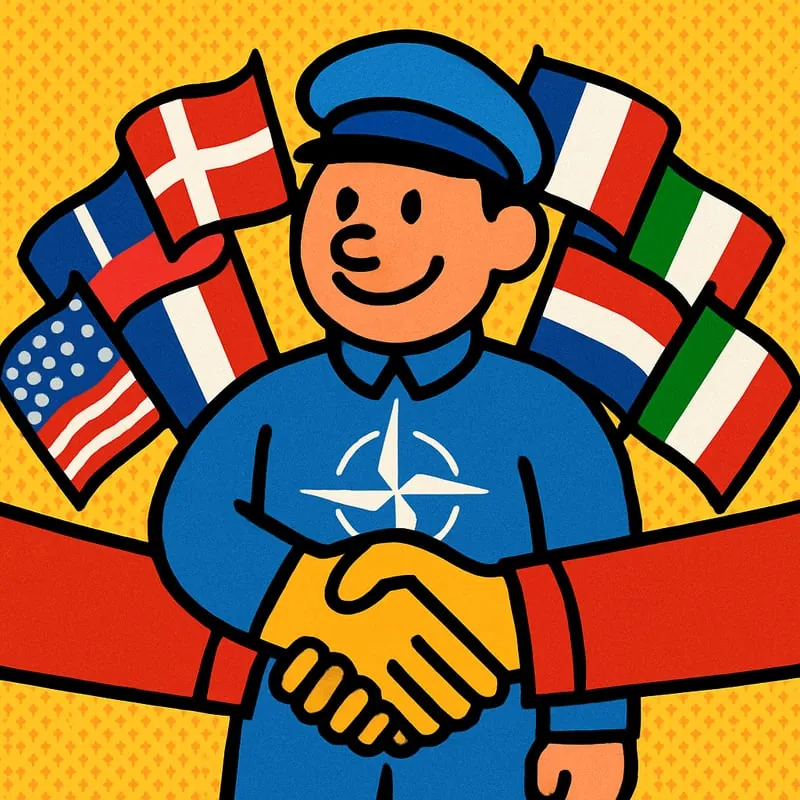
On April 4, 1949, in a grand hall in Washington, D.C., representatives from 12 countries picked up their pens and signed a document that promised something huge: if any one of them was attacked, all the others would come to help. This was the North Atlantic Treaty, and it created NATO - the North Atlantic Treaty Organization. The founding members included the United States, Canada, the United Kingdom, France, Italy, and seven other nations bordering the Atlantic.
World War II had ended just four years earlier, and Europe was nervously eyeing the Soviet Union, whose army stretched across much of Eastern Europe. Western countries wanted a team-up so big that no one would dare attack them. The treaty's famous Article 5 says an attack on one is an attack on all - a promise that would be invoked for the very first time after the September 11, 2001 attacks on the United States.
NATO has grown ever since. Today it has 32 member countries, including Finland and Sweden, which joined recently. The alliance runs joint military exercises, shares intelligence, and keeps headquarters in Brussels, Belgium. NATO shows what happens when nations decide they're stronger together than alone - a giant pinky-promise that has shaped global politics for more than 75 years.