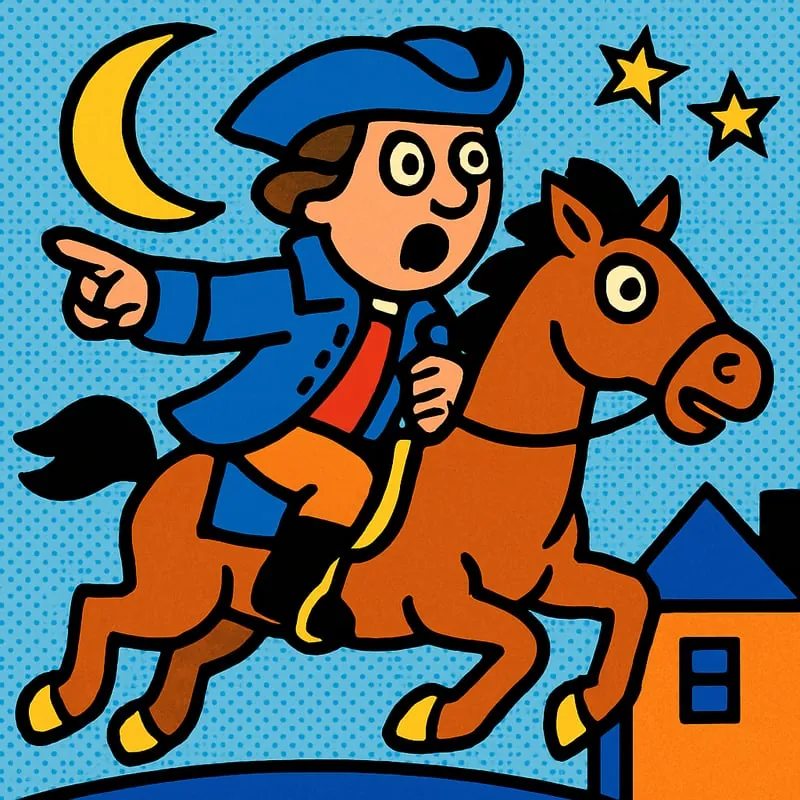
On the night of April 18, 1775, a silversmith named Paul Revere slipped into a rowboat in Boston Harbor and quietly crossed to Charlestown under a rising moon. Waiting for him was a borrowed brown horse named Brown Beauty. Revere swung into the saddle and galloped off into the dark countryside with urgent news: British soldiers - about 700 of them - were marching out to arrest patriot leaders and seize a stash of weapons.
Before he left, Revere had arranged a famous signal in the steeple of Boston's Old North Church: 'One if by land, two if by sea.' Two lanterns flashed that night, meaning the British were crossing the Charles River by boat. Revere thundered through Medford, Lexington, and nearby villages, banging on doors and shouting warnings. He probably didn't actually yell, 'The British are coming!' - most colonists still considered themselves British. Historians think he said something more like, 'The Regulars are coming out!'
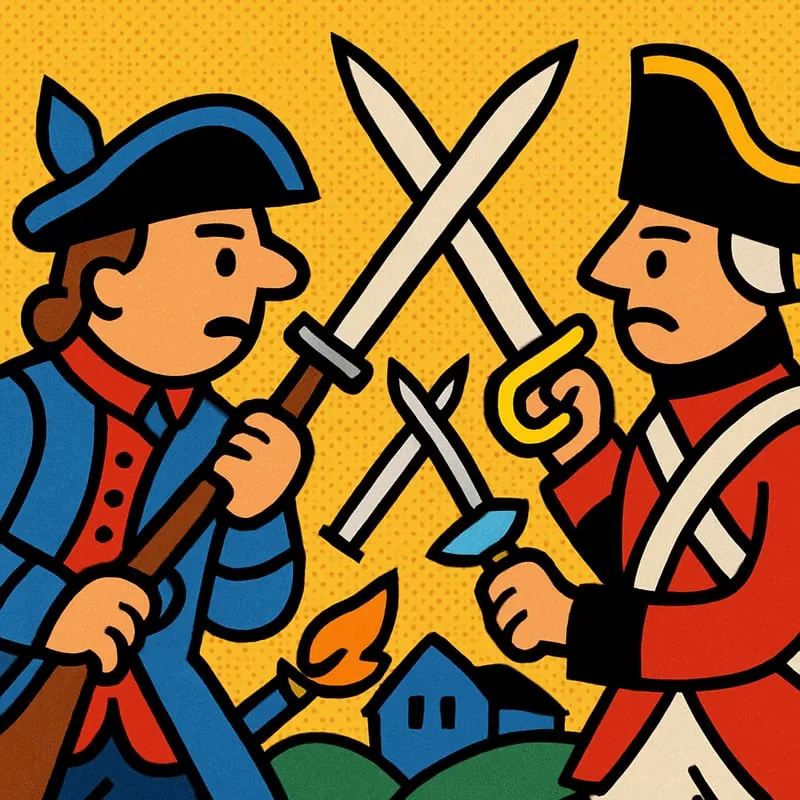
Revere was captured by British soldiers later that night, but two other riders - William Dawes and Samuel Prescott - kept the warning going. By dawn, hundreds of armed colonial militia called Minutemen were gathering. The next morning the first shots of the American Revolution rang out at Lexington and Concord. A poem written nearly 100 years later turned Revere into the most famous of the three riders, but on that real April night, an ordinary silversmith helped flip the spark that lit a new nation.