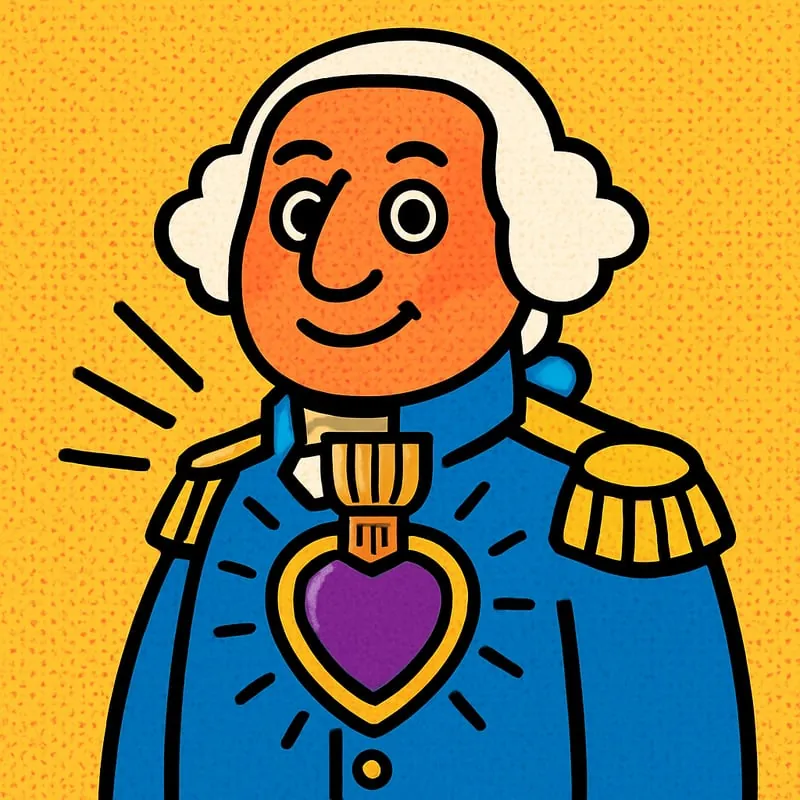
On August 7, 1782, during the final stretch of the American Revolutionary War, General George Washington signed an order from his headquarters in Newburgh, New York, creating a brand-new kind of award. He called it the Badge of Military Merit. It was a small purple cloth heart, sewn with silver thread, and it was meant for ordinary soldiers who had shown unusual bravery or loyalty.
This was a big deal. Until then, most military honors went only to officers and noblemen. Washington wanted to recognize the regular grunts who slept in muddy trenches and marched on blistered feet. Only three soldiers are known to have received the original badge, all sergeants. After the war ended, the award was forgotten and the medals were lost for nearly 150 years.
Then in 1932, on the 200th anniversary of Washington's birth, the U.S. Army revived the honor and renamed it the Purple Heart. It became the medal given to any American service member wounded or killed by an enemy in combat. More than 1.8 million Purple Hearts have been awarded since then, including to soldiers in World War II, Korea, Vietnam, Iraq, and Afghanistan. The medal still carries Washington's profile right in the center, a small purple thank-you that started with a general who believed even the lowest-ranking soldier deserved to be remembered.