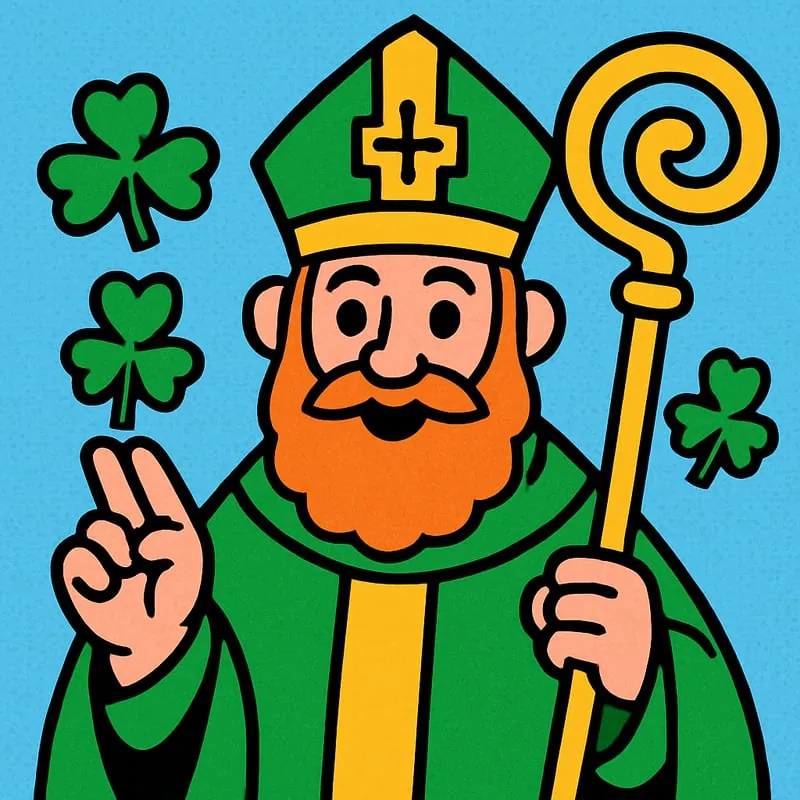
Around the year 461, on a date traditionally remembered as March 17, a missionary bishop named Patrick is said to have died in Ireland. His real life was even stranger than the legends. He was born in Britain around 387 to a Roman family, and when he was about 16, Irish pirates raided his village and kidnapped him. They sold him as a slave in Ireland, where he spent six lonely years herding sheep on a cold hillside and learning to pray to pass the time.
According to his own writings - one of the only real letters we have from him - he eventually escaped, walked 200 miles to the coast, and convinced sailors to take him home to his family in Britain. But years later, he had a dream that the people of Ireland were calling him back. He returned to the very place he'd been a slave, this time as a Christian missionary. Over the next 30 years he traveled across Ireland, supposedly using the three-leafed shamrock to explain his ideas. The story that he drove all the snakes out of Ireland is just a legend - Ireland never had any snakes to begin with.
For centuries, Saint Patrick's Day was a small religious feast in Ireland. Irish immigrants brought it to America in the 1700s and turned it into a huge celebration of Irish heritage. The first parade marched through New York City in 1762, decades before the United States even existed. Today, cities dye their rivers green (Chicago uses 40 pounds of dye), people wear shamrocks and silly hats, and an enslaved teenager turned wandering missionary is remembered every March 17 in a global party that he could never have imagined.