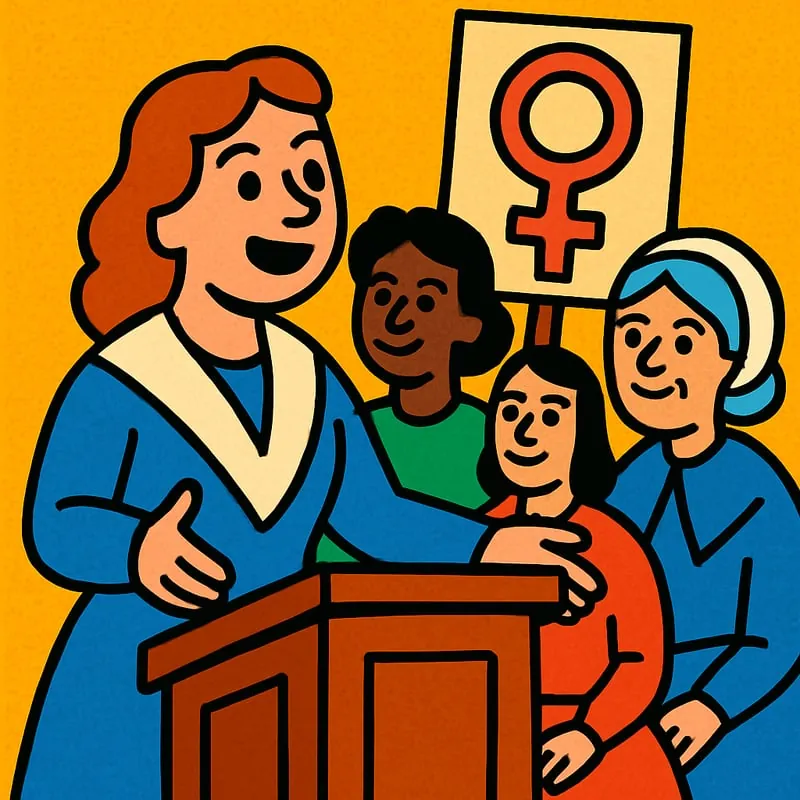
On July 19, 1848, hundreds of women and men crowded into the Wesleyan Methodist Chapel in the little town of Seneca Falls, New York. Hot July sun blazed through the open windows, and women in long dresses fanned themselves with their bonnets. They had come to do something no one had ever done in America before: hold an entire convention about women's rights. It had all been organized in just ten days by Elizabeth Cady Stanton and Lucretia Mott over a cup of tea.
Stanton stood at the front and read aloud the Declaration of Sentiments, a document she had carefully written modeled on the Declaration of Independence. But where the original said 'all men are created equal,' Stanton wrote, 'all men and women are created equal.' She listed grievances - women couldn't vote, own property after marriage, go to most colleges, or hold many jobs. Out of all 11 resolutions, the most shocking was the demand for women's right to vote. Even some supporters thought that was too bold. Frederick Douglass, the famous formerly enslaved abolitionist, stood up to support it, and the resolution passed.
Seneca Falls kicked off a 72-year fight. Women like Susan B. Anthony, Sojourner Truth, and Ida B. Wells carried it forward through marches, hunger strikes, and arrests. Finally, in 1920, the 19th Amendment gave American women the right to vote. None of the women who started the movement at Seneca Falls lived to vote. But their two-day convention in a small chapel sparked a wave of change that swept the world, and women's rights movements still echo their words today.