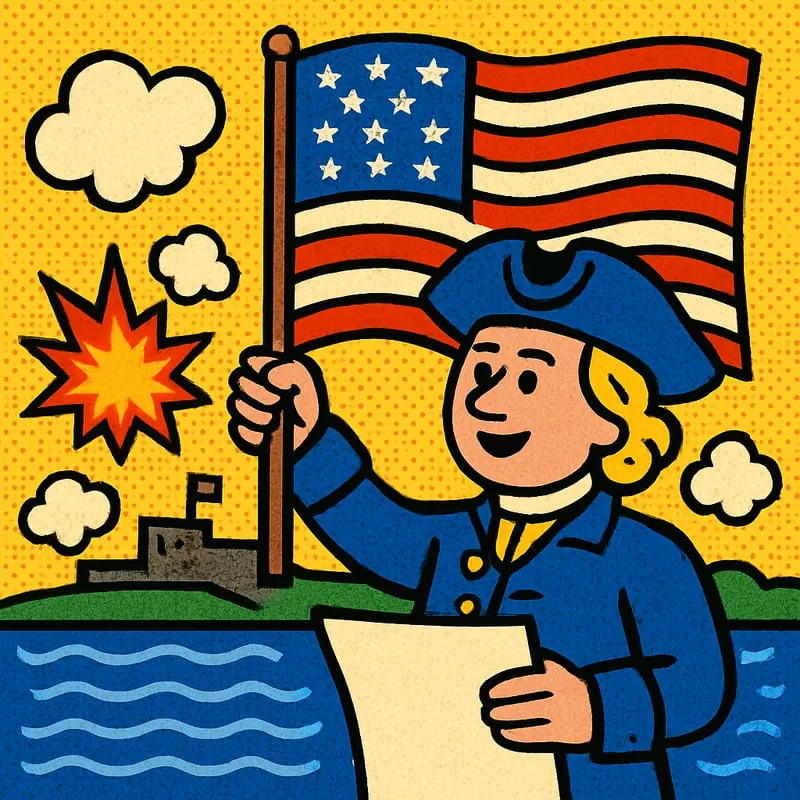
On the morning of September 14, 1814, a young American lawyer named Francis Scott Key stood on the deck of a ship in Baltimore Harbor, squinting through the smoke. He had spent the night watching British warships pound Fort McHenry with cannons and rockets during the War of 1812. Now, as the sun rose, Key strained to see whether the American flag was still flying above the fort. When he spotted its huge red, white, and blue shape still snapping in the breeze, he was so moved that he pulled an old letter from his pocket and started scribbling a poem on the back.
The flag Key saw was enormous, 30 feet tall and 42 feet wide, with stars the size of dinner plates. It had been sewn by a Baltimore woman named Mary Pickersgill, who took six weeks and used 400 yards of cloth, sometimes laying it out on the floor of a brewery because no other building was big enough. Key called his poem Defence of Fort M'Henry, but people soon started singing it to the tune of an old British drinking song and renamed it The Star-Spangled Banner. It spread quickly through newspapers, and within weeks bands were playing it at celebrations.
The song didn't officially become the United States national anthem until 1931, more than a century after Key wrote it. Today the original giant flag is on display at the Smithsonian Museum in Washington, D.C., carefully sealed in a low-light room because the fabric is fragile. Anytime an Olympic athlete stands on a podium for the United States, the words written on a scrap of paper by an exhausted lawyer in a smoky harbor begin to play.