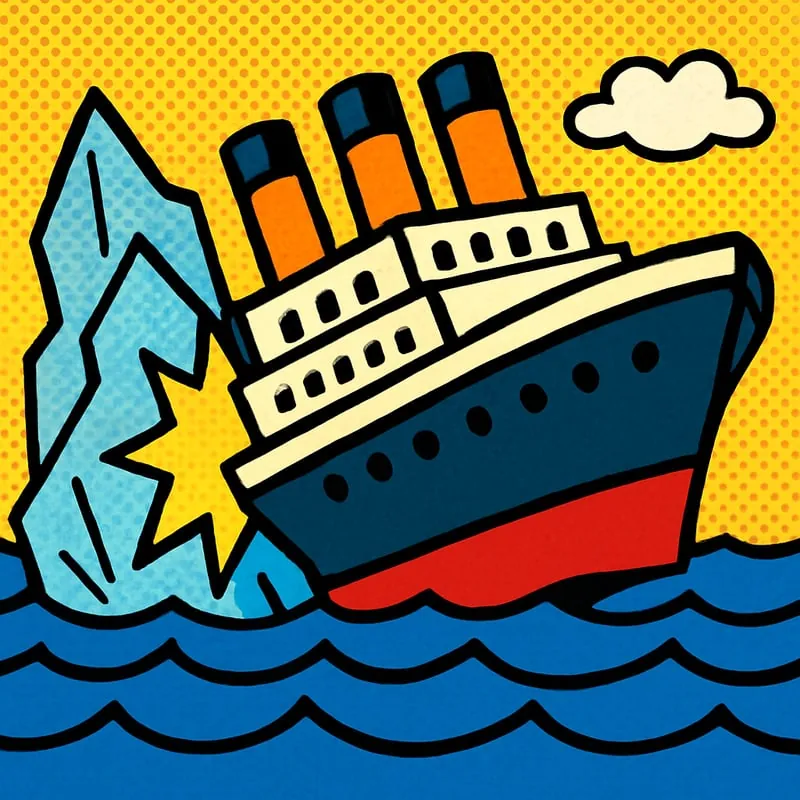
Late on the night of April 14, 1912, the brand-new ocean liner RMS Titanic was steaming through the dark North Atlantic, heading for New York on her very first voyage. Newspapers had called her unsinkable. She was the biggest ship in the world, fitted with grand staircases, a swimming pool, and electric lights in every cabin. At 11:40 p.m., a lookout shouted 'Iceberg, right ahead!' but it was too late. The ship's side scraped along the ice, and within minutes water was pouring into her front compartments.
Captain Edward Smith ordered the lifeboats lowered, but there were only 20 of them for over 2,200 people on board. By 2:20 a.m. on April 15, the Titanic broke in two and slipped beneath the freezing waves. About 1,500 people died in the icy water. Only around 700 made it to lifeboats and were rescued hours later by the ship Carpathia.
The disaster shook the world. New international rules demanded enough lifeboats for everyone on board, 24-hour radio watches at sea, and an Ice Patrol that still tracks icebergs in the North Atlantic today. The Titanic herself wasn't found until 1985, sitting two and a half miles down on the seabed - where she remains, a silent reminder that no ship is unsinkable.