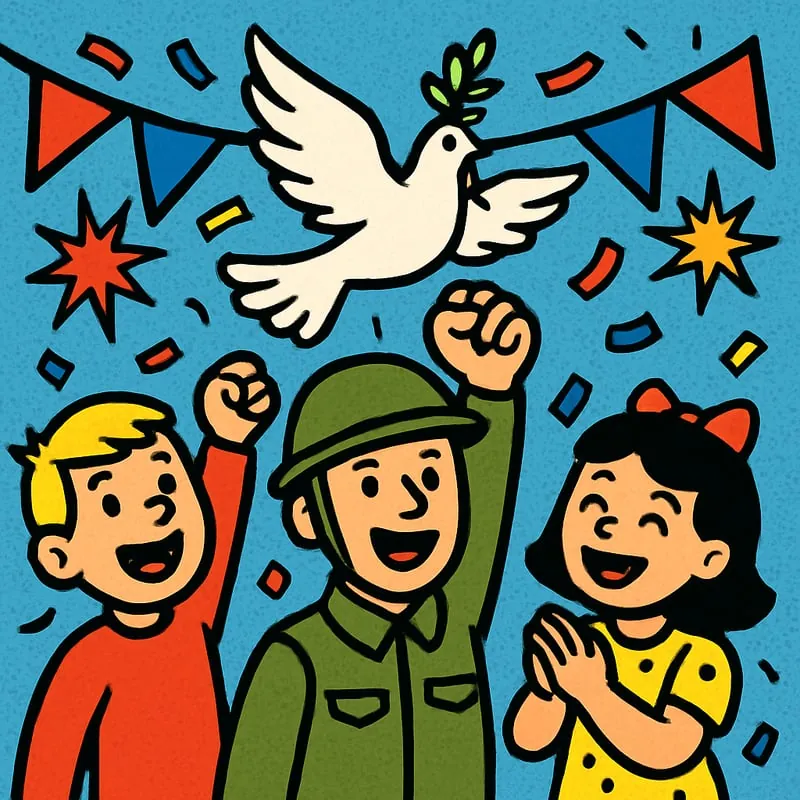
On May 8, 1945, church bells rang across Europe for the first time in years. World War II in Europe was finally over. Earlier that morning, German military leaders had signed an unconditional surrender, ending nearly six years of fighting that had killed tens of millions of people. The day was named Victory in Europe Day - VE Day for short - and it set off the biggest street parties the world had ever seen.
In London, more than a million people flooded into the streets. Crowds packed Trafalgar Square and stretched all the way to Buckingham Palace, where King George VI, Queen Elizabeth, and Prime Minister Winston Churchill waved from the balcony. The two royal princesses, including a young Elizabeth who would one day be queen, slipped out in disguise to dance with strangers in the crowd. In New York, ticker tape rained down from skyscrapers. In Paris, freed only months before, people climbed lampposts and sang the Marseillaise.
The celebrations didn't mean the whole war was finished. Fighting continued in the Pacific against Japan for three more months. And the joy was mixed with grief - almost everyone had lost someone. Cities like Warsaw, Coventry, and Dresden lay in rubble. Survivors of concentration camps were just being freed. Still, VE Day marked the moment when peace returned to a continent that had nearly destroyed itself. Every year, countries from Britain to France to Russia hold ceremonies on May 8 to remember both the celebration and the cost of that long-awaited day.