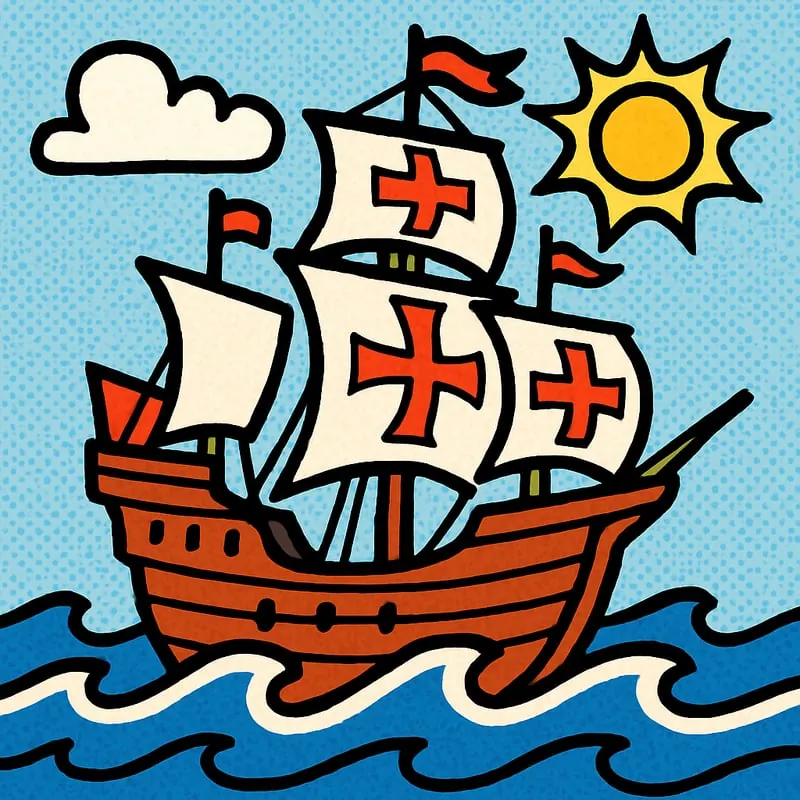
On September 6, 1522, eighteen exhausted, sunburned, half-starved sailors steered a battered ship called the Victoria into the harbor of Sanlucar de Barrameda, Spain. Their sails were patched, their barrels were empty, and their bodies were so thin you could count their ribs. But they had just done something no humans had ever done before: they had sailed all the way around the world.
Three years earlier, five Spanish ships and 270 men had set out under captain Ferdinand Magellan, hoping to reach the spice islands by sailing west instead of east. The journey turned into a nightmare. They battled freezing storms at the tip of South America, crossed an ocean Magellan named the Pacific because it looked so peaceful, and discovered that the world was much, much bigger than anyone had guessed. Magellan himself was killed in a battle in the Philippines, and the crew kept going under a new captain, Juan Sebastian Elcano. By the time the last ship limped home, four of the five ships were gone and only 18 of the original 270 men were still alive.
The voyage of the Victoria changed everything humans knew about their planet. It proved once and for all that Earth is round and that all the oceans connect. It also showed how stunningly far apart things really are. Modern airplanes can now circle the globe in two days, and astronauts on the International Space Station do it every 90 minutes, but every one of those trips traces the path that 18 exhausted sailors first dragged across the map.