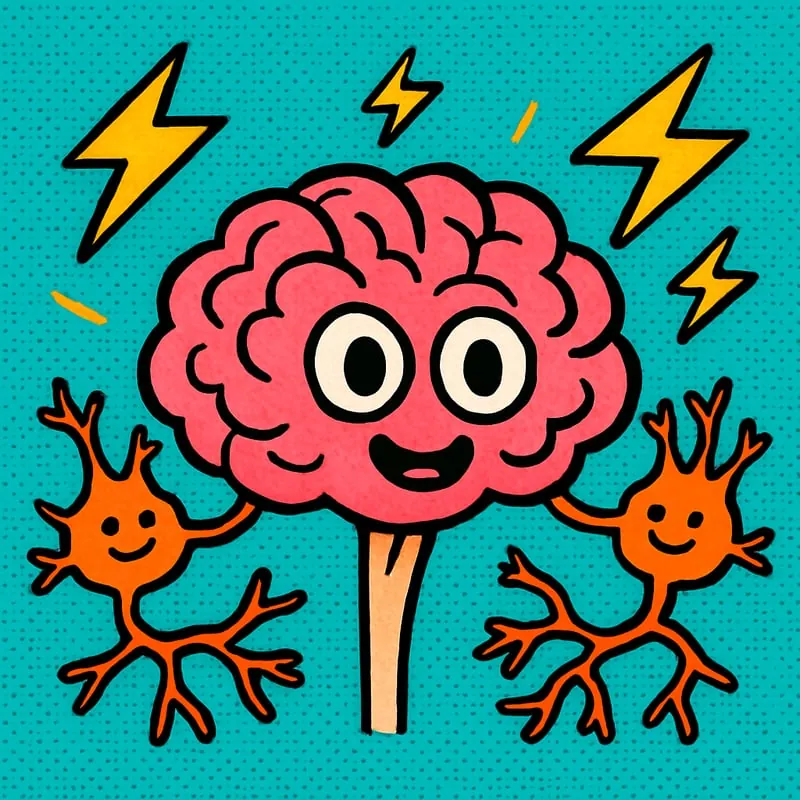
A neuron isn’t a simple wire. It’s a tiny electrochemical cell that fires brief pulses of electricity to send a signal to other neurons. When the pulse reaches the end of one neuron, chemicals are released that trigger the next neuron in line to fire. Multiply that by 86 billion neurons firing dozens of times per second and you get the busiest electrical network in nature.
Each signal - called an action potential - travels along a neuron’s long axon at speeds of up to 270 miles per hour. Signals going to and from your fingers and toes are some of the fastest in your body, because the axons are wrapped in a fatty insulator called myelin that speeds them up.
All that electrical activity adds up. At any moment, your brain is generating roughly 23 watts of power - about as much as a dim LED light bulb. EEG (electroencephalogram) machines pick up these signals through your scalp and can show different brainwave patterns when you’re asleep, focused, daydreaming, or learning.