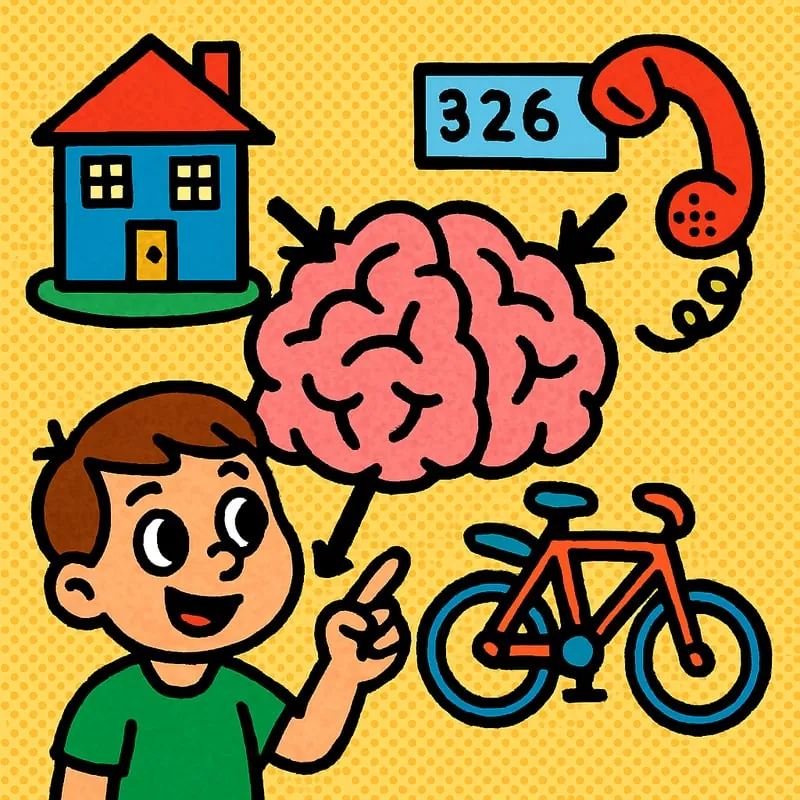
We use the word “memory” like it’s one thing, but inside the brain it’s many different systems, each handling different kinds of remembering. There’s working memory - the few seconds of info you hold when remembering a phone number long enough to dial it. There’s short-term memory - what you ate for breakfast yesterday. And there’s long-term memory - your first day of school, the name of your second-grade teacher, your home address.
Even long-term memory is split. Episodic memory is for events you experienced (a birthday party). Semantic memory is for facts (Paris is the capital of France). Procedural memory is for skills (how to ride a bike or tie your shoes). Each one lives in a different region of the brain.
You can see this in patients with brain injuries. Some lose the ability to form new episodic memories - they can’t remember what happened five minutes ago - but still know how to play piano. Others forget facts but remember experiences. Memory isn’t a single bucket; it’s a whole library of systems running in parallel.