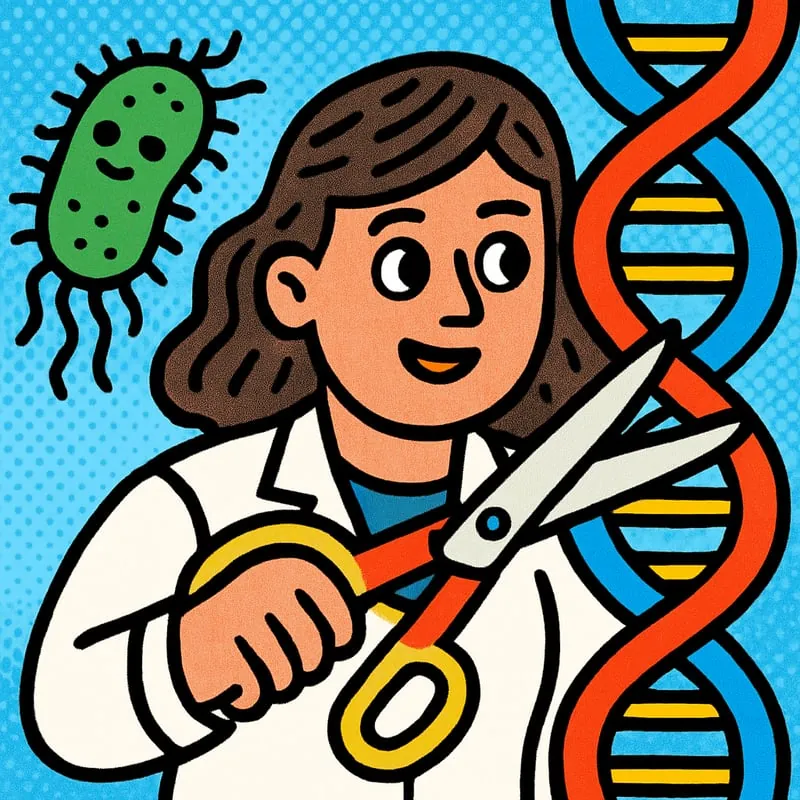
In the late 1980s scientists studying bacteria found strange, repeating chunks of DNA that didn’t seem to do anything. They called them CRISPRs - for Clustered Regularly Interspaced Short Palindromic Repeats. For 20 years nobody knew what they were for. Then researchers realised CRISPRs were a kind of immune memory. When a virus attacked a bacterium, the bacterium saved a snippet of the virus’s DNA so it could recognise and chop up that virus next time.
In 2012, scientists Jennifer Doudna and Emmanuelle Charpentier showed that this bacterial chopping system could be programmed to cut any DNA - not just viruses. Suddenly humans had a pair of molecular scissors that could snip out broken bits of genes and even paste in new ones. They won the Nobel Prize for Chemistry in 2020.
CRISPR is already being used to treat real diseases. In 2023 doctors used it to cure a teenager named Victoria Gray of sickle cell disease - by editing the DNA inside her own bone marrow cells. It’s one of the biggest shifts in medicine since antibiotics.