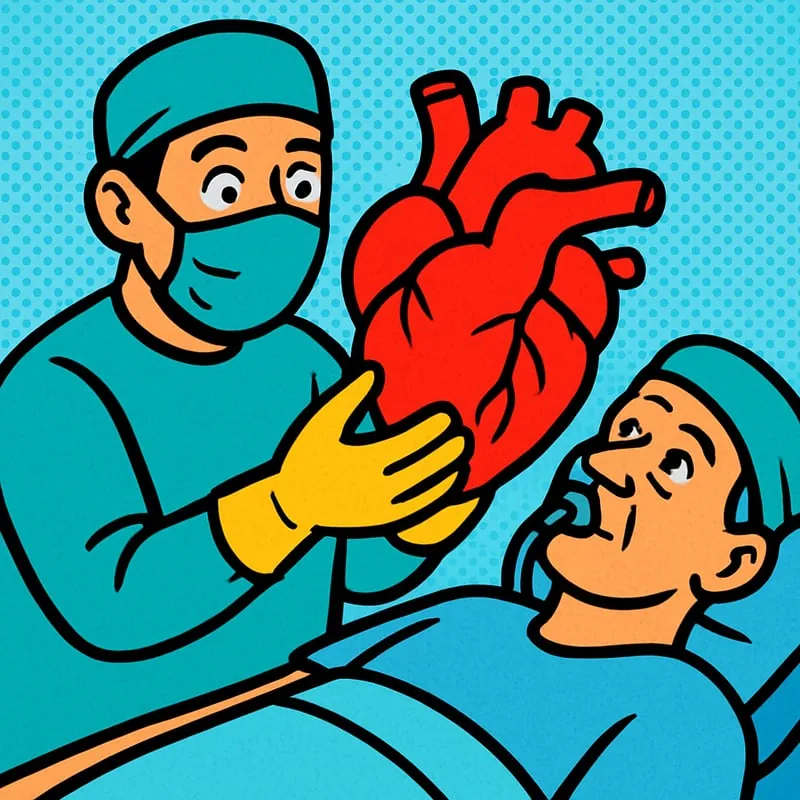
On December 3, 1967, a team of about 30 doctors at Groote Schuur Hospital in Cape Town, South Africa, did something nobody had ever done before. They took the heart of a young woman named Denise Darvall, who had just died in a road accident, and stitched it into the chest of a 53-year-old grocer named Louis Washkansky.
The surgeon in charge was Dr. Christiaan Barnard. The operation lasted about five hours. When they restarted the new heart with a small electric shock, it started beating right away. Louis woke up the next day and even spoke to his wife. He lived for 18 more days before pneumonia killed him.
That seems short, but it was a giant leap. The big problem was that the body’s immune system attacks anything it doesn’t recognise, including a new heart. Better anti-rejection drugs followed in the 1980s. Today about 5,000 heart transplants are done every year, and many patients live for decades.