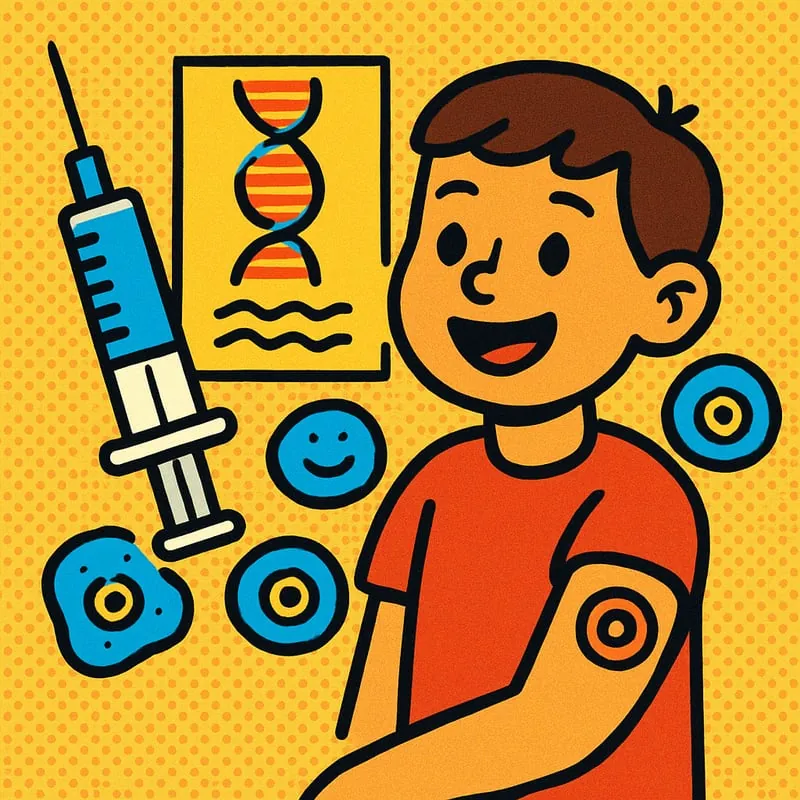
Older vaccines worked by injecting either a weak version of a germ or a tiny piece of one. Your immune system would meet it, get angry, and remember what it looked like. mRNA vaccines are sneakier. They don’t contain any germ at all. Instead they carry a short instruction sheet - called messenger RNA - that tells your own cells how to build one little piece of the germ. Your cells whip up some practice targets, your immune system spots them and learns the shape.
The big advantage is speed. Once scientists know the exact shape of a new virus, they can design an mRNA vaccine for it in a single weekend. That’s why the COVID-19 vaccines arrived less than a year after the virus was first identified - by far the fastest vaccine in history.
The Hungarian-American scientist Katalin Karikó worked on the idea for decades when almost nobody believed in it. She and her colleague Drew Weissman shared the 2023 Nobel Prize for medicine. Researchers are now testing mRNA vaccines for cancer, flu and HIV.