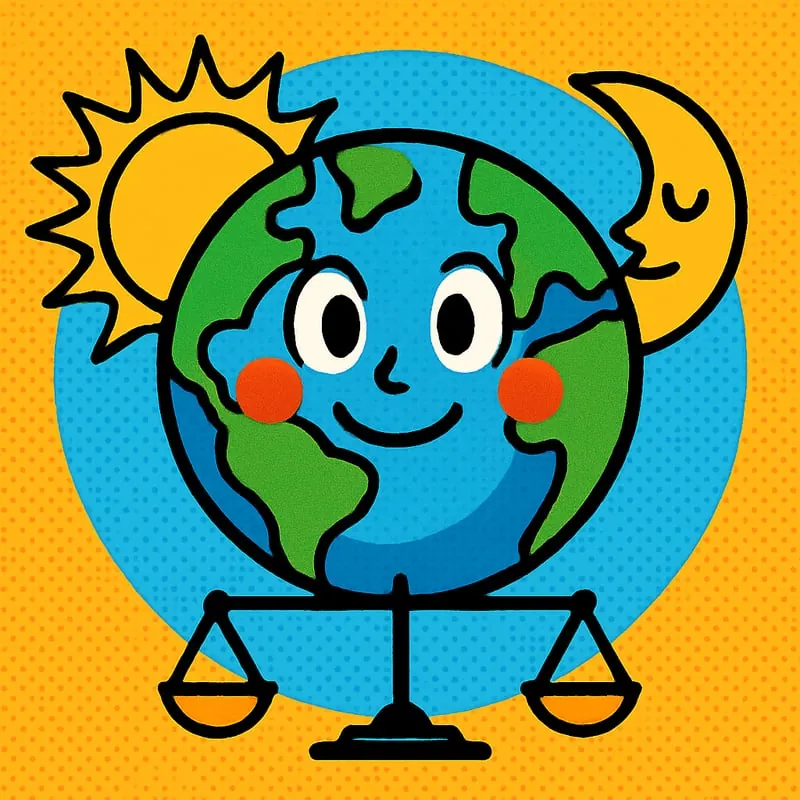
There are two days each year when Earth’s tilt doesn’t favor either hemisphere - when the Sun is directly above the equator and both hemispheres get exactly the same amount of light. These are called the equinoxes, from Latin meaning “equal night.”
The vernal (spring) equinox happens around March 20, and the autumnal equinox around September 22. On both days, day and night are approximately 12 hours long for almost everyone on Earth, no matter where you live. The Sun rises exactly due east and sets exactly due west, which is unusual - at most other times of year, sunrise and sunset positions shift northward in summer and southward in winter (in the Northern Hemisphere).
The equinoxes also mark the official start of spring and autumn in many calendars. After the spring equinox, days get longer in the Northern Hemisphere as the Sun climbs higher each day. After the autumn equinox, days get shorter. Many cultures around the world have ancient celebrations tied to the equinoxes - like the spring rituals at Chichen Itza in Mexico, where the Sun creates a serpent-like shadow on the famous pyramid only on the equinoxes.