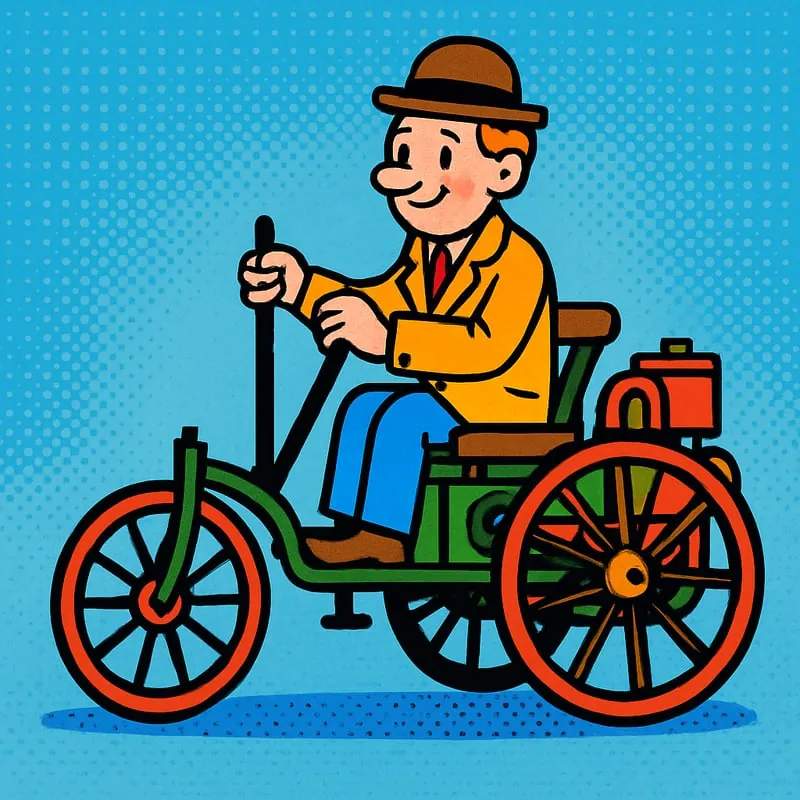
In 1885 in Germany, an engineer named Karl Benz finished a strange-looking machine that ran on gasoline. It had a single cylinder engine, a wooden frame, and three skinny bicycle wheels. He called it the Patent-Motorwagen, and it was the first true automobile - a vehicle that could move under its own power without horses or rails.
The Motorwagen was tiny by modern standards. Its engine produced less than one horsepower, about the same as a strong hairdryer. The top speed was around 10 miles per hour, and there were no proper brakes, gears, or even a steering wheel - just a lever. People in town thought it was a joke or a fire hazard.
What changed everything was Karl’s wife, Bertha Benz. In 1888, without asking, she took the Motorwagen on a 66-mile trip with her two sons to visit her mother. She fixed problems along the way with a hat pin and a garter, and proved to the world that cars could actually be useful. Sales took off after her trip.