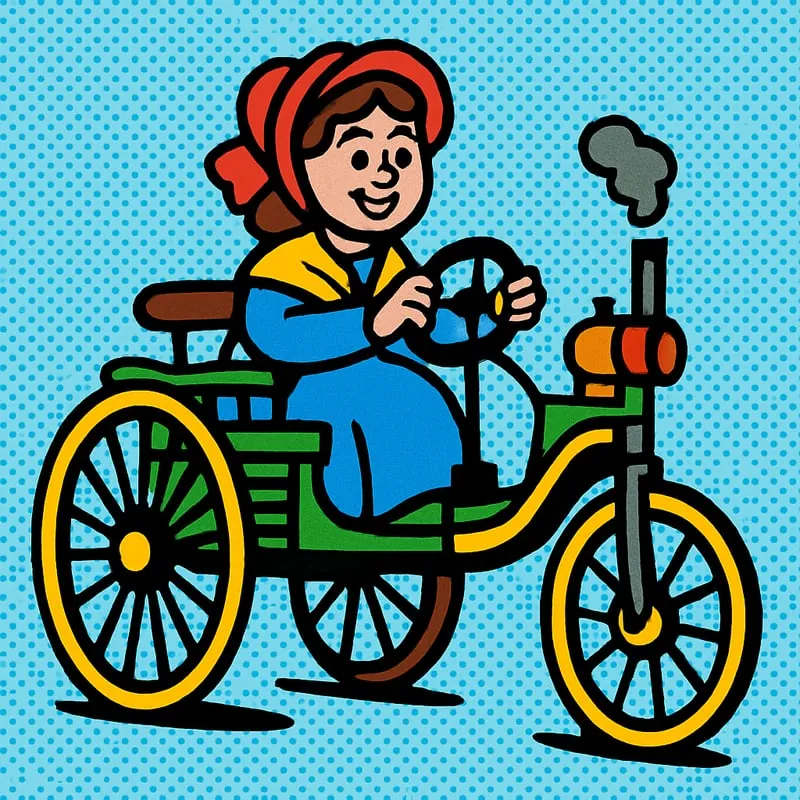
In 1885 a German engineer named Karl Benz finished building something nobody had quite made before - a buggy powered by a small internal-combustion engine that burned gasoline. It had three wheels, a single-cylinder engine and a top speed of about 10 miles per hour. He called it the Benz Patent-Motorwagen.
Hardly anyone wanted to buy it. People thought it was loud, dangerous and probably useless. So in 1888, without telling her husband, Bertha Benz loaded up their two sons and drove the Motorwagen 65 miles from Mannheim to her mother’s house. She fixed it with a hairpin along the way and bought fuel at pharmacies, which sold a cleaning fluid called ligroin.
Bertha proved a car could go the distance, and orders started coming in. Within decades, cars went from a strange three-wheeled curiosity to one of the most common machines on Earth. Today there are well over a billion cars on the world’s roads.