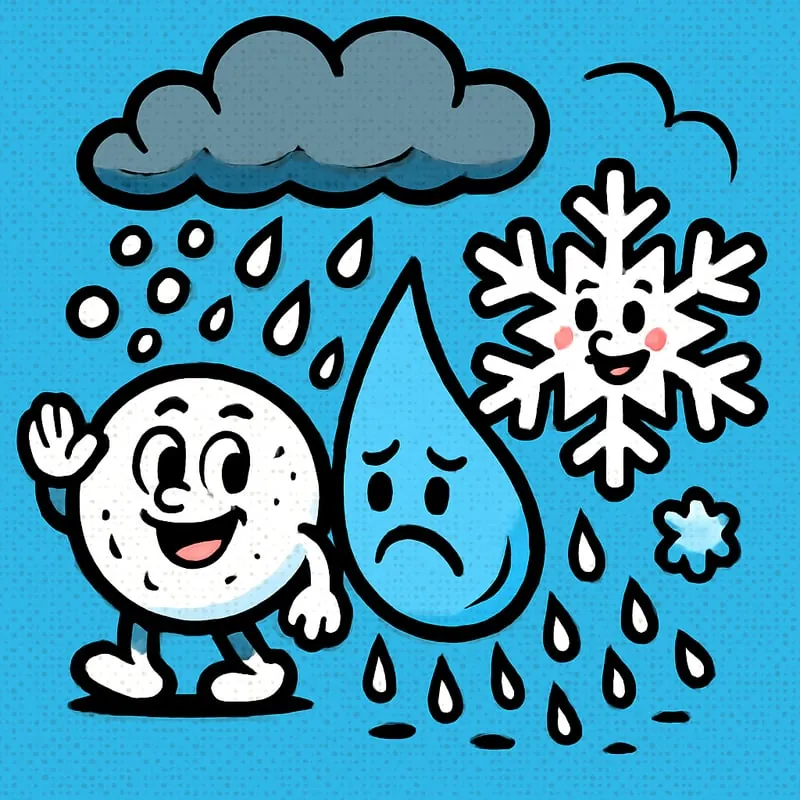
When water falls from the sky in solid form, it comes down in several different shapes - and they aren’t really the same thing. Snow, sleet, hail, and freezing rain are all different types of precipitation, each formed by different conditions in the atmosphere.
Snow forms in cold clouds when water vapor crystallizes directly into ice. It falls in delicate six-sided crystals or aggregates of them (“snowflakes”). Light, fluffy, and beautiful.
Sleet starts as snow, melts as it falls through a warmer layer of air, then refreezes as it falls back into colder air near the ground. It hits as tiny clear ice pellets - about the size of grains of rice. It bounces.
Hail is the giant one. It forms inside thunderstorms with strong updrafts, where ice particles get repeatedly lifted up into freezing air, coated with another layer of ice, and then lifted up again. They grow into balls, sometimes the size of marbles, sometimes the size of baseballs.
Freezing rain falls as rain, but the air near the ground is below freezing - so the rain freezes instantly on contact with anything cold. The result is the slickest, most dangerous winter precipitation: every surface coated with a thin layer of ice, like glass.