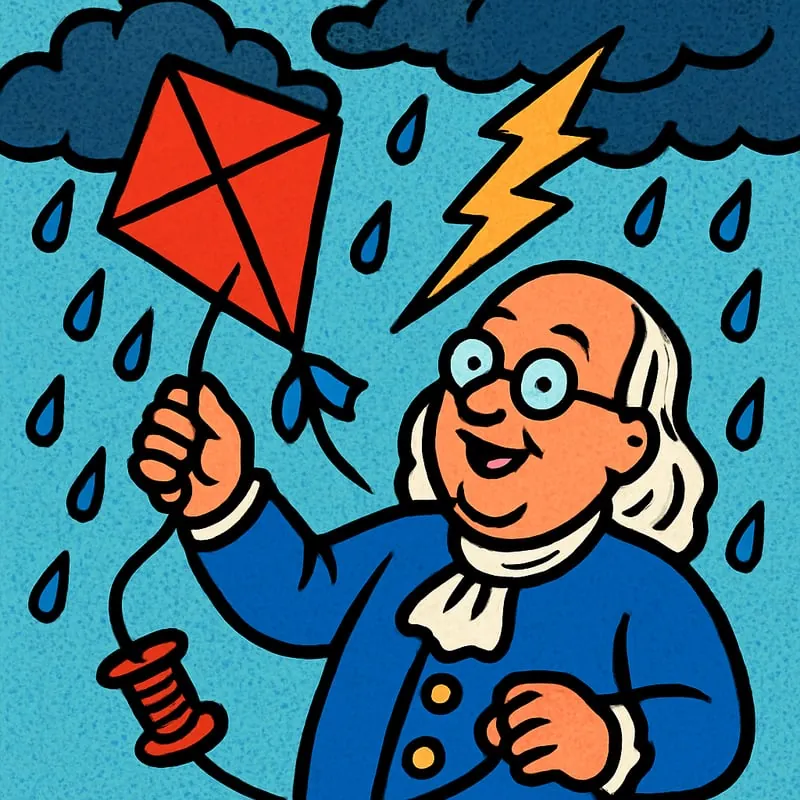
In 1752, Benjamin Franklin tied a metal key to the string of a kite and flew the kite into a thunderstorm. He was trying to prove a hypothesis: that lightning was electricity. The kite captured electrical charge from clouds, traveled down the wet string, and gave Franklin a small shock from the key. Franklin had risked his life to confirm the connection.
(Some details of the famous story are disputed - and don’t try this yourself. People have died doing similar experiments. Franklin’s account suggests he kept himself insulated and was lucky to not be killed.)
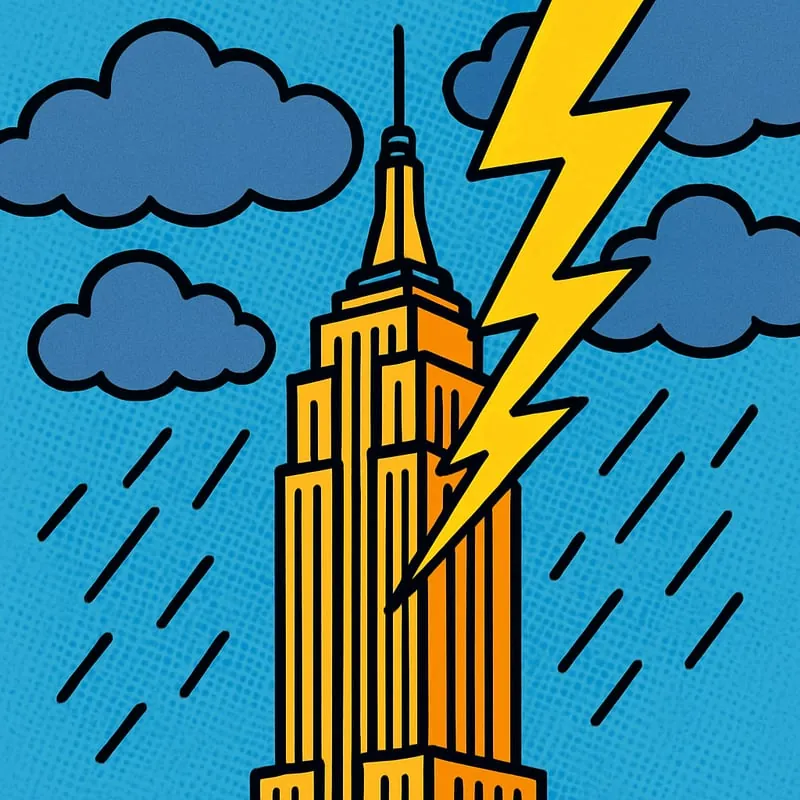
What Franklin did next changed architecture forever. Using the same principle, he invented the lightning rod: a metal pole on the highest point of a building, connected by wire to the ground. If lightning strikes the rod, the electricity flows down the wire to the earth, harmlessly bypassing the structure. The first lightning rods were installed in Philadelphia within a year. Today, lightning rods (technically called “air terminals”) still protect millions of buildings worldwide using essentially Franklin’s original design.