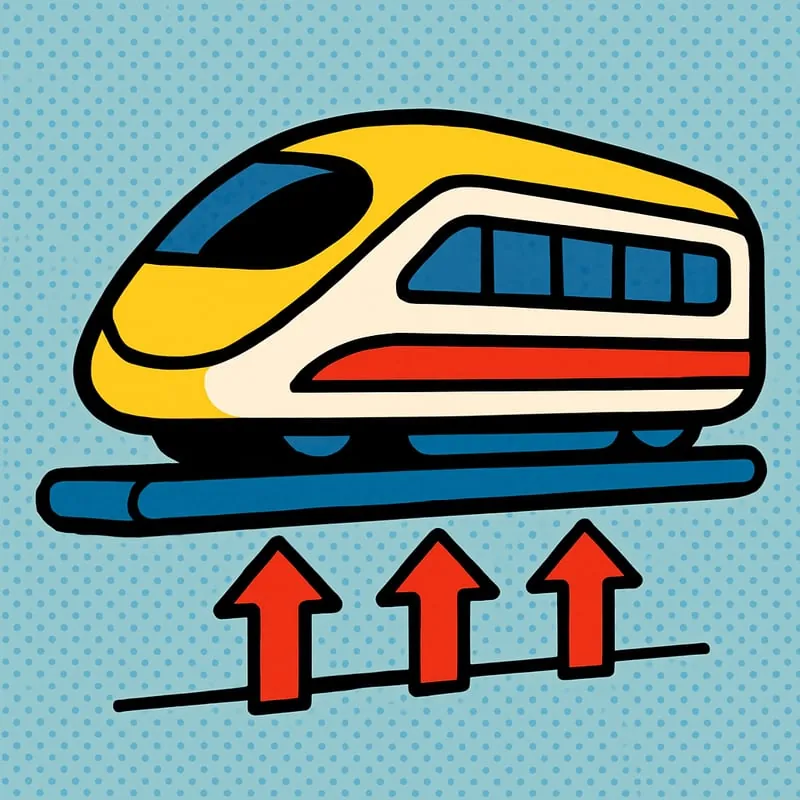
A maglev train uses no wheels, no axles, and no contact with the track. Instead, powerful electromagnets lift the train a few millimeters into the air and propel it forward by switching magnetic fields along the guideway in front and behind it. With no friction from wheels grinding on rails, maglevs can hit ridiculous speeds.
The fastest maglev ever recorded reached 375 mph during a 2015 test run in Japan - quick enough to cross the United States in around 8 hours if you could lay tracks straight enough. Shanghai has the most famous maglev in everyday service, shuttling passengers from the airport into the city at up to 268 mph.
Maglevs are smooth and quiet because nothing on the train physically touches anything. They also wear out much more slowly, since there are no metal wheels grinding on metal rails. The downside is the cost - laying a maglev track is far more expensive than a normal train line, which is why only a handful of routes exist worldwide.