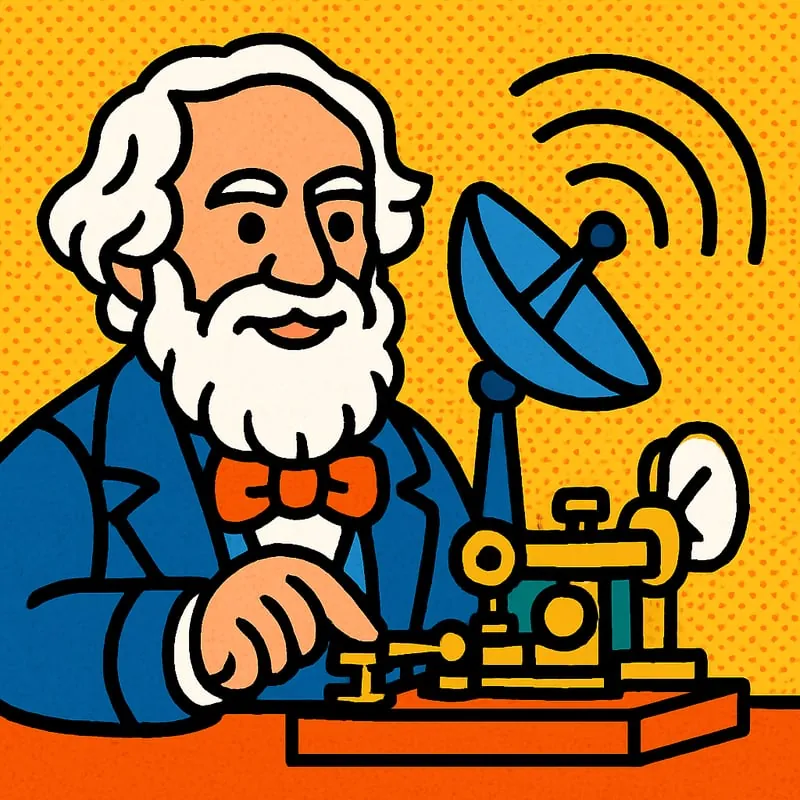
Before the telegraph, sending a message over a long distance was as fast as the fastest horse. Then in 1844, a painter-turned-inventor named Samuel Morse tapped out a short sentence on his new telegraph machine in Washington D.C., and it appeared seconds later in Baltimore - 40 miles away. The message was, “What hath God wrought?”
Morse’s clever trick was the code itself. Every letter and number had its own pattern of dots and dashes. A single dot was a quick tap, a dash was a longer tap. Operators learned to send and read these patterns by ear. The most famous Morse signal in history is SOS: three dots, three dashes, three dots - the international call for help.
Morse code spread around the world in just a few decades and stayed in heavy use through both world wars. It mostly died out as faster digital systems took over, but a few pilots, ships and amateur radio fans still use it today. The whole modern habit of texting in short, fast bursts traces back to those original taps.