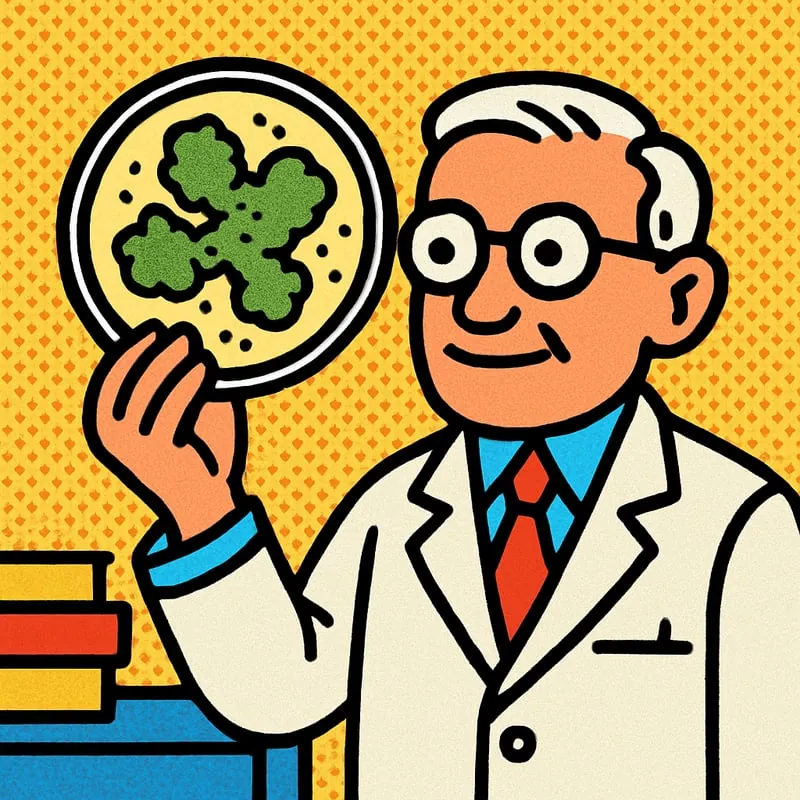
In 1928, a Scottish scientist named Alexander Fleming was studying bacteria at a London hospital. Before going on a two-week holiday, he stacked some petri dishes on a bench and left. When he came back, he noticed something weird. One of his dishes had a fuzzy mold growing on it - and around the mold, all the bacteria had died.
Fleming had stumbled on the very first true antibiotic. The mold was making a substance that killed harmful bacteria without hurting people. He called it penicillin. At first nobody could figure out how to make enough of it to use as medicine. It took 14 more years and a team of scientists at Oxford to turn it into a working drug.
By World War II, penicillin was being mass-produced and saving soldiers’ lives from infected wounds. Today antibiotics like penicillin are estimated to have saved over 200 million lives. Before penicillin, a small cut, a scraped knee or a chest infection could easily turn deadly.