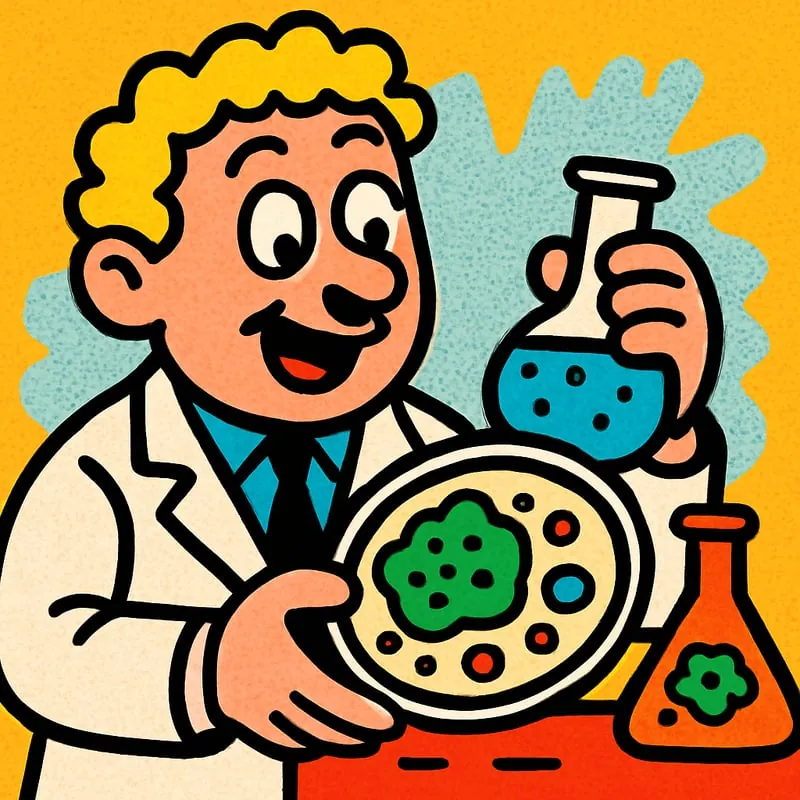
In September 1928 a Scottish bacteriologist named Alexander Fleming came back from a summer holiday to his messy London lab. He had left a stack of petri dishes with bacteria on his bench. One of them had grown a fuzzy blue-green mould - and around the mould, all the bacteria were dead.
Most scientists would have tossed the contaminated dish in the bin. Fleming looked closer. The mould was a kind of Penicillium fungus, and whatever it was producing was killing germs. He named the mystery substance “penicillin.” It took another decade before other scientists figured out how to grow it in big enough quantities to give to sick people.
Before penicillin, a simple cut could turn deadly and a chest infection could kill almost anyone. Antibiotics like penicillin changed all that. They have saved an estimated 200 million lives - making one accidentally messy lab one of the luckiest accidents in human history.